
From Buddha Dharma to Diplomacy:
Collective Wisdom, Global Dialogue, and Civilizational Coexistence at the Second Global Buddhist Summit
Introduction
The Second Global Buddhist Summit (2nd GBS) held on 24-25 January 2026, at Bharat Mandapam, New Delhi, marked an important moment in the contemporary engagement of Buddhism at the global level. The Second GBS, organized jointly by the International Buddhist Confederation (IBC) in association with the Ministry of Culture, Government of India, defined itself as an umbrella covering all aspects, including spirituality, scholarship, governance, diplomacy, entrepreneurship, and civilizational encounters. The Summit had participation from 44countries, ranging from heads of Buddhist Sangha, senior government dignitaries, diplomats, and business leaders, Buddhist practitioners, and representatives of civil society organizations. More than 200 international participants took part in the deliberative processes of the Summit, which demonstrates the universal nature and the contemporary significance of Buddhism. Further, as a complement to the international participation, more than 800 delegates from India, ranging from academicians, research scholars, students of over 30 academic centers, Buddhist monks and nuns, Buddhist practitioners, actively participated in the deliberative processes, which signifies the importance of the Summit both as an international meeting and a national civilizational encounter. Underlying Summit events remained rooted in its theme: “Collective Wisdom, United Voice, and Mutual Coexistence.”
 Moreover, it placed Buddhism no longer solely in terms of its religious character, but in its capacity to address modern global dilemmas as a shared ethic.
Inaugural Session
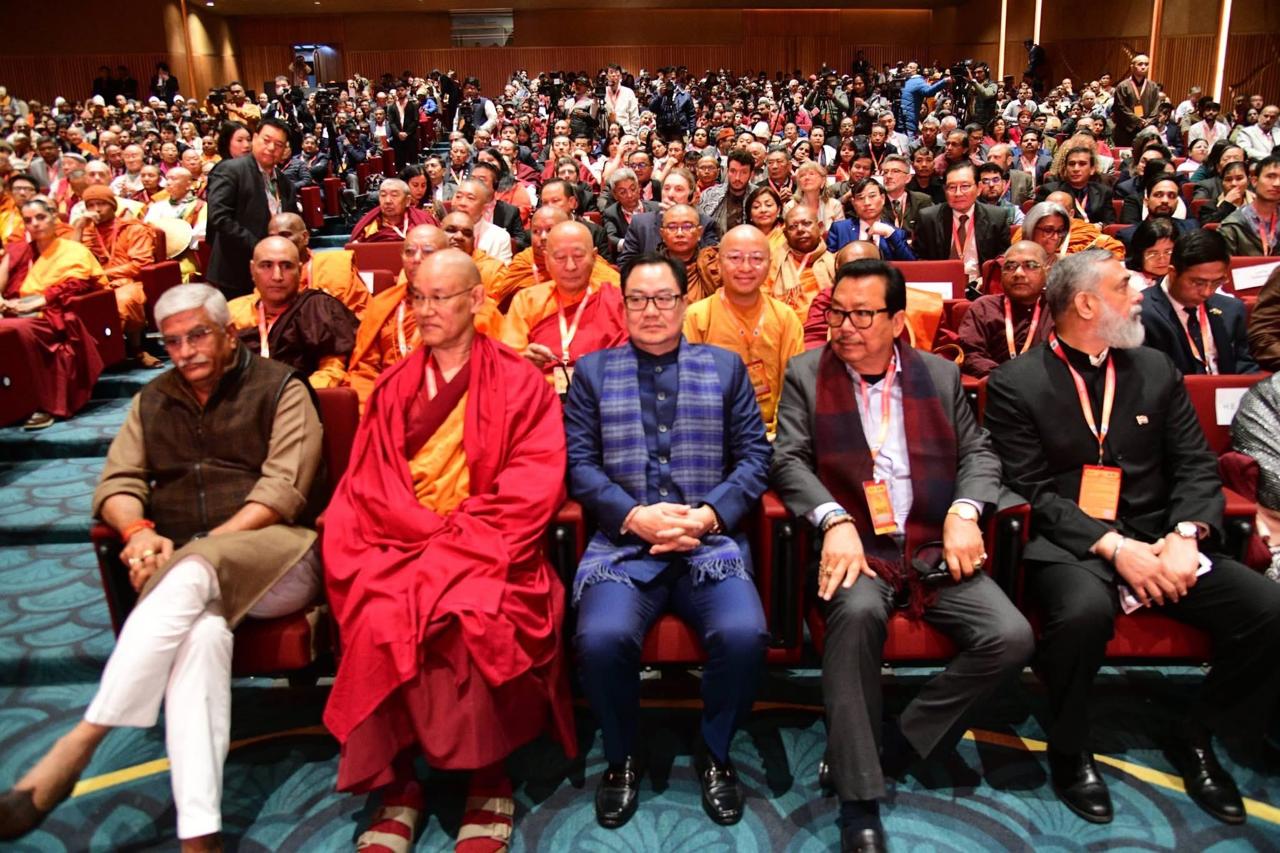
The first session of the Second Global Buddhist Summit was characterized by thought-provoking and visionary speeches by the Chief Guest, Shri Gajendra Singh Shekhawat, Hon’ble Union Minister of Culture and Tourism, and the Guest of Honour, Shri Kiren Rijiju, Hon’ble Minister of Parliamentary Affairs and Minority Affairs, Government of India. The speeches, as reported in official communications and press reviews, highlighted the renewed civilizational engagement of India with Buddhism, both as a spiritual legacy and a contemporary global resource. In his speech, Shri Gajendra Singh Shekhawat emphasized India’s role as the ‘land of the Buddha’ in preserving, promoting, and projecting Buddhist heritage in a way that is inclusive, authentic, and globally relevant. He also pointed out the significance of Buddhism as a ‘civilizational bridge that binds Asia and the rest of the world together’ and mentioned the importance of cultural institutions, heritage conservation, and global cooperation in the revival of Buddhist sites and traditions. His speech placed Buddhism in the larger context of India’s cultural diplomacy, emphasizing its relevance to peace, sustainability, and ethical coexistence in the modern world.
 Shri Kiren Rijiju, in his speech as the Guest of Honour, emphasized the relevance of the Buddhist message of compassion, dialogue, and harmony in the current age of conflict and division. He also highlighted the importance of Buddhist values in promoting social cohesion and respect for diversity. His speech recognized the role of the Sangha and Buddhist institutions in promoting moral leadership and people-to-people diplomacy, both in India and globally.
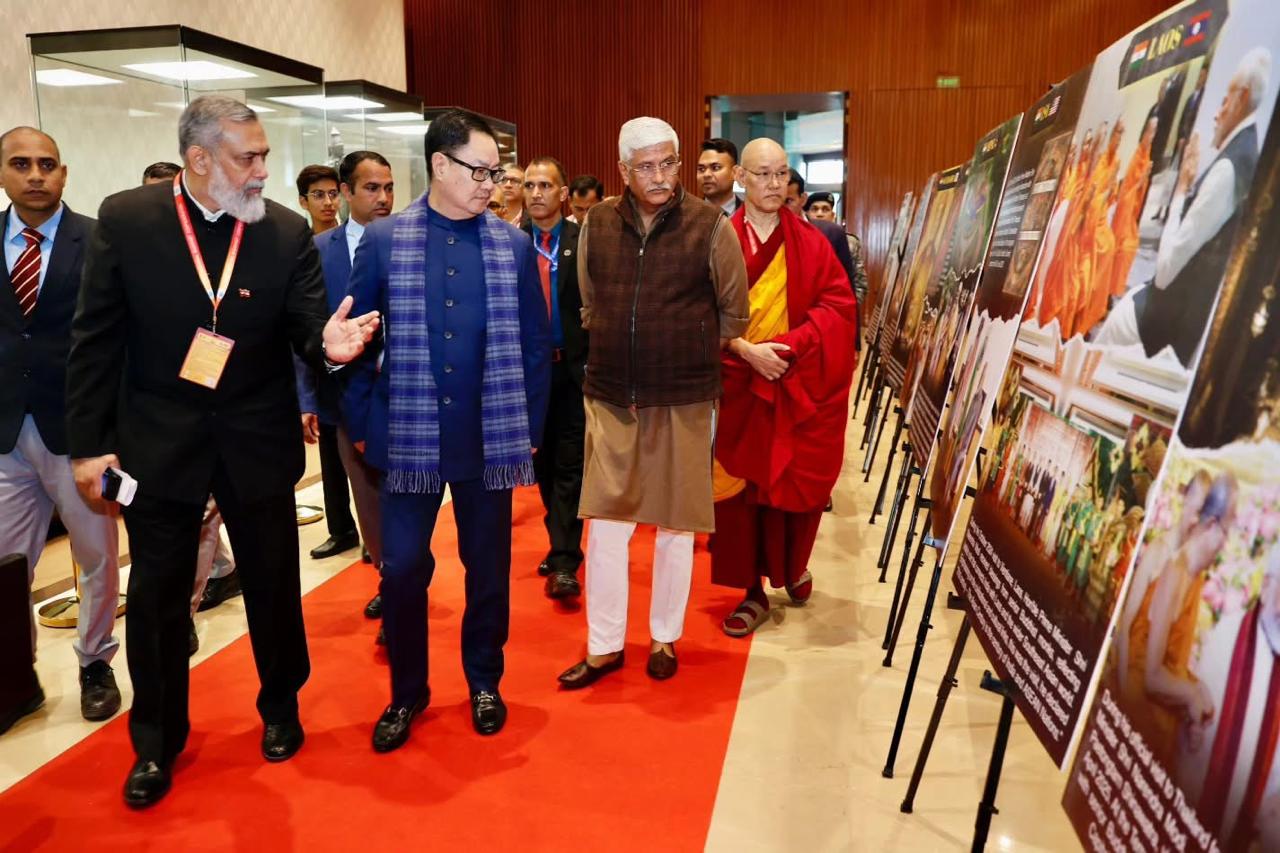 The speeches of other dignitaries and senior monks during the inaugural session of the Summit reflected the same ideas, emphasizing the relevance of Buddhism as a living tradition that connects spirituality, governance, and global citizenship. Taken together, the speeches positioned the Summit not only as a conference but also as a platform for applying the Buddhist wisdom to the contemporary age.
Collective Wisdom and United Voice: Buddhism as a Framework for Social Harmony The first thematic session, held under the Chair of Shri Abhijit Halder, Director General of the International Buddhist Confederation, focused on building the conceptual framework of the Summit. Setting the tone, the Moderator emphasized that Buddhism offers a moral vocabulary capable of uniting diverse political systems and cultural traditions without erasing difference. Renowned political leaders and venerable spiritual masters from Thailand, Myanmar, India, Russia/Kalmykia, and Vietnam spoke on the potential of Buddhism in creating harmonious societies in multicultural and multicultural settings.
 H.E. Mr. Maris Sangiampongsa, Former Foreign Minister of Thailand, spoke about the historical significance of Buddhism in Southeast Asia as a mediator between state politics and moral accountability. He emphasized how Buddhist principles of compassion, moderation, and dialogue have long shaped the diplomatic culture of the region, providing insights into the current global governance situation characterized by tension and fragmentation. H.E. Ms. Daw Nu Mra Zan, Deputy Minister for Religious and Cultural Affairs, Myanmar, spoke about the significance of Buddhism in promoting social cohesion in multi-ethnic and multi-religious societies. She emphasized the importance of inter-religious dialogue and cultural sensitivity as a manifestation of Buddhist ethics in public life, especially in societies undergoing transition. From the Indian side, H.E. Shri Chowna Mein, Deputy Chief Minister of Arunachal Pradesh, spoke about Buddhism as a living tradition that influences the life of the communities in the Himalayan regions of India. He said that the Buddhist philosophy offers a natural and congenial environment for harmonious coexistence, environmental consciousness, and cultural continuity, particularly in border regions that act as bridges of civilization. Speaking on behalf of the Russian Republic of Kalmykia, H.E. Mr. Dzgambinov Ochir Vladimirovich emphasized the ability of Buddhism to thrive outside Asia, thus proving its versatility in different cultures and political structures. He said that Buddhist ethics can enhance intercultural understanding and international cooperation in a multipolar world.
 Concluding the meeting, Most Venerable Thich Duc Thien, Padma Shri awardee from Vietnam, reiterated the role of the Sangha in defining Buddhism as a means for peace and reconciliation. He said that the wisdom of the group comes when spiritual leadership and responsible action meet. The meeting was on how Buddhist wisdom was perceived to exist as a shared moral heritage, and not an ideology. There was a mention of compassion (kuruṇā), moral control (śīla), non-violence (ahiṃsā), and dialogue, which are more practical tools that help in governance, conflict, or society building. The speakers gave examples of how the principles of Buddhism could provide an ethical vocabulary for diversity that could transcend political and cultural differences. At the close of the meeting, it was agreed that in addition to diversity and respect, the voice of Buddhism could also represent stability in the midst of fragmentation. The panel also revealed that the sacred relics of the Buddha had travelled to three countries which were represented on the panel viz Thailand, Vietnam and Kalmykia Autonomous Republic, Russia.
 Right Livelihood and Ethical Economies: Buddhism and Contemporary Entrepreneurship
The second panel was on the relevance of Buddhist ethics in modern economic systems, but it focused on the Buddhist teaching of Right Livelihood (Sammā-Ājīva). It was a combined discussion of entrepreneurs and businessmen from Thailand, Vietnam, Russia, and Singapore, and was moderated by H.E. Gyeltrul Jigme Rinpoche, President of Rigon Thupten Mindrolling Monastery. This panel discussion explored the application of Right Livelihood (Sammā-Ājīva) in today’s economic systems. The Moderator of this panel defined economic activity as a virtuous pursuit, encouraging delegates to re-evaluate entrepreneurship through the prism of virtuous intention and effect. Dr. Supachai Verapuchong, entrepreneur from Thailand, spoke about the application of Buddhist mindfulness principles to business leadership. He emphasized that virtuous intention and compassion-informed decision-making can improve the sustainability and employee welfare of organizations. Mr. Bui Trung Thuong, Vietnam, spoke about the experience of large-scale development projects, suggesting that economic development must always be kept in harmony with social responsibility. He suggested that Buddhist ethics can help achieve a balance between infrastructure development and the welfare and preservation of culture. Ms. Maria Aksenova, entrepreneur and investor from Russia, spoke about conscious capitalism and ethical investment. She suggested that Buddhist ethics can help inform responsible financial behavior that seeks long-term social value rather than short-term profit. Mr. Seah Ying Cong, Co-founder of Glints, Singapore, spoke about the digital economy and start-up culture. He suggested that Buddhist ethics can help guide innovation ecosystems towards inclusivity, fairness, and human-centered technological innovation.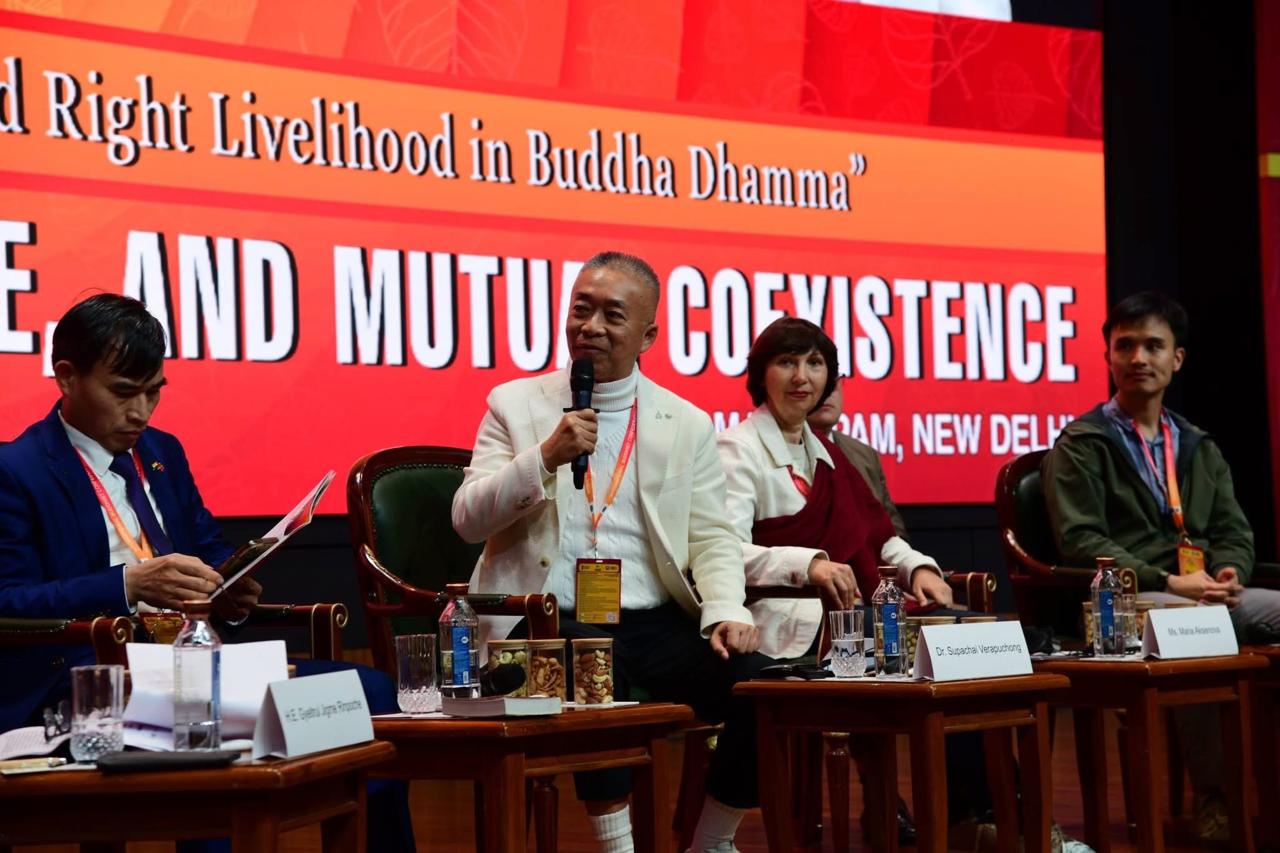 Rather than dwelling on the moral irrelevance of economic activity, the discussion of the meeting focused on the moral relevance of entrepreneurship, its significance, and its effects on society and the environment. In contemplating the significance of Buddhist values in achieving innovation, sustainability, and economic development, the meeting emphasized the advantages of Buddhist entrepreneurship, which can provide a more sustainable and responsible approach to economic development, instead of exploitative economic systems, and lead us to humane development. The session reinterpreted Sammā-Ājīva for modern economies, advocated ethical entrepreneurship and socially responsible innovation, and linked Buddhist values with sustainable and inclusive economic models.
Buddhism, Science, Healthcare, and Sustainable Living The third session was on the topic of Buddhism at the Crossroads of Science, Health Care, and Sustainability. Moderated by Prof. Sisir Roy, the panel included experts from Bhutan, the United States of America, Cambodia, Sri Lanka, and Nepal. The session emphasized the growing intersection of Buddhist meditative traditions with new scientific findings, particularly in the fields of neuroscience, mental health, and holistic medicine. Even the ethical implications of new technologies related to these areas, such as AI in healthcare, were considered during the discussions.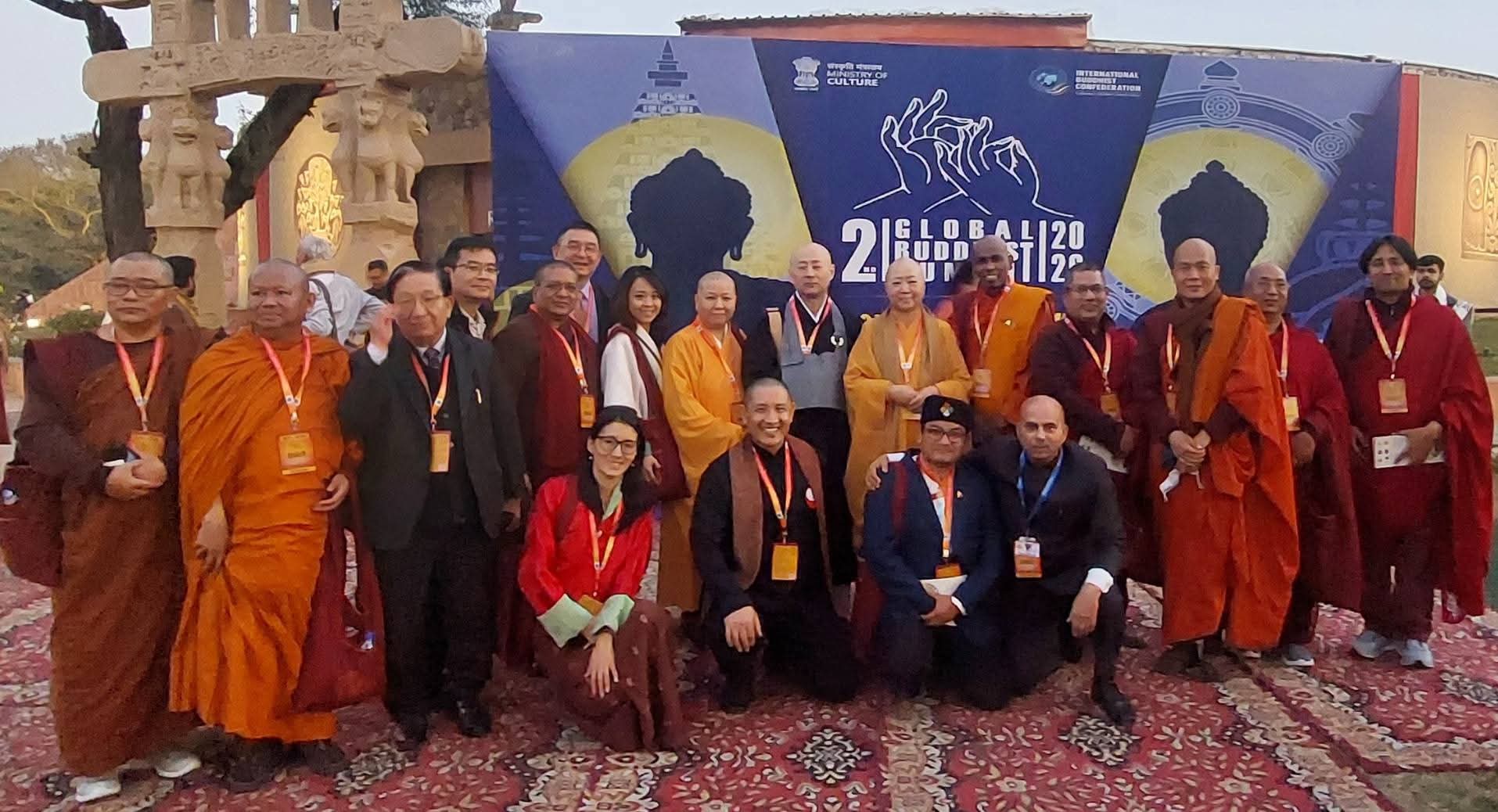
H.E. Dzongsar Jamyang Khyentse Rinpoche stressed that Buddhism supports scientific research by providing insights into the internal aspects of human experience. He warned against the advancement of technology without moral reflection and internal awareness. Dr. Ratna Jyothi Kakumanu, Medical Advisor in AI and Healthcare (USA), focused on the increasing convergence of mindfulness and neuroscience, as well as mental health care. She pointed out that Buddhist traditions can be used to make technological approaches to healthcare more human-friendly. H.E. Dr. Khy Sovanratana, Secretary of State, Cambodia, addressed public health and social welfare, stressing the need for compassion-driven governance and preventive healthcare based on Buddhist values. Dr. Sanath Mahawithanage, Sri Lanka, presented his mindfulness-based research and its efficacy in stress management and mental health treatment. Dr. Bishal Joshi, Nepal, looked back at the integration of Buddhist ethics into medical education and community health work. The presentations reiterated that Buddhism adds an ethical dimension to scientific input by incorporating the elements of compassion and self-regulation into scientific findings.
The session showed the integration of mindfulness, neuroscience, AI, and medicine, promoted Buddhist ethics in public health and sustainability, and presented Buddhism as a holistic approach to mental and societal health and concluded with the consensus that Buddhist concepts of well-being and sustainability provide holistic solutions to the contemporary problems of stress, environmental degradation, and fragmented healthcare systems. Learning in the Light of Buddha Dhamma: Education as Ethical Formation
Education as a tool for ethical/intellectual change was the main theme of the fourth session, which was chaired by Prof. Siddharth Singh, the Vice Chancellor of Nava Nalanda Mahavihara. Monastic educational leaders of senior caliber from Vietnam, Myanmar, Nepal, and Indonesia reflected on the Buddhist tradition of education. In reconsidering the Nalanda model, the importance of integrative approaches to learning, including critical questioning, debate, moral emphasis, and contemplative practice, was stressed. Most Venerable Dr. Thich Nhat Tu, Vietnam Buddhist University, stressed education as a means to achieve wisdom, moral understanding, and social engagement. Most Venerable Dr. Ashin Kumara, Sitagu International Buddhist Academy, Myanmar, stressed the importance of monastic education in maintaining the strict tenets of the teachings while being involved in modern society. Prof. Dr. Subarna Lal Bajracharya, Vice Chancellor, Lumbini Buddhist University, Nepal, stressed Nalanda as an international model of education that combines scholarship, ethics, and meditation. Dr. Edi Ramawijaya Putra, Indonesia, stressed the importance of inter-cultural academic collaboration in Buddhist education. The session furthermore stressed the importance of Buddhist education in the development of wisdom, compassion, and citizenship, and academic achievement. It was suggested that Buddhist approaches to education could greatly enrich contemporary education systems by providing a framework for the development of whole and responsible citizens of the world. The session reiterated Nalanda as an international model of Buddhist education, stressed ethical learning and contemplative education, and promoted academic collaboration among Buddhist institutions. Sangha Dynamics in a Changing World
The fifth thematic session was focused on the growing role of the Sangha in modern society. The session, moderated by Ven. Ananda Bhante, General Secretary of the Mahabodhi Society, Bengaluru, featured significant attendance from the monastic community of Nepal, Lao PDR, Japan, and Taiwan. Most Venerable Yongey Mingyur Rinpoche stressed the importance of meditation and transformation as the basis for social engagement. Most Venerable Vanhkham Vongsasoulin, Lao PDR, spoke on the role of Sangha administration in maintaining the continuity of the teaching. Rev. Kosho Tomioka, Japan, spoke on the challenges of monastic institutions in modern technology-driven societies. Master Shih Jian-Yin, Taiwan, spoke on socially engaged Buddhism and cooperation between Sanghas. The talks focused on the subjects of monastic management, ritual practices, meditation traditions, and the Sangha’s dealing with the social world. While confirming the significance of Vinaya practice and the maintenance of tradition, it was accepted that adaptive engagement in the contexts of education, social service, and interfaith dialogue was essential. The inter-sangha approach of cooperative effort, transcending traditions and nationality, was reaffirmed, confirming the Sangha’s importance as a moral and spiritual reference point in the increasingly changing world. Valedictory Session and Cultural Integration
The proceedings of the Valedictory Session of the Second Global Buddhist Summit were both a reflective conclusion to the deliberations and a spiritual culmination of the dialogue, deliberation, and cultural engagement of the two-day Summit event. The proceedings were marked by the Valedictory Address of Most Venerable Bhikkhu Sanghasena, Founder and President of the Mahabodhi Institution of Meditation Centre and Member of the International Buddhist Confederation. 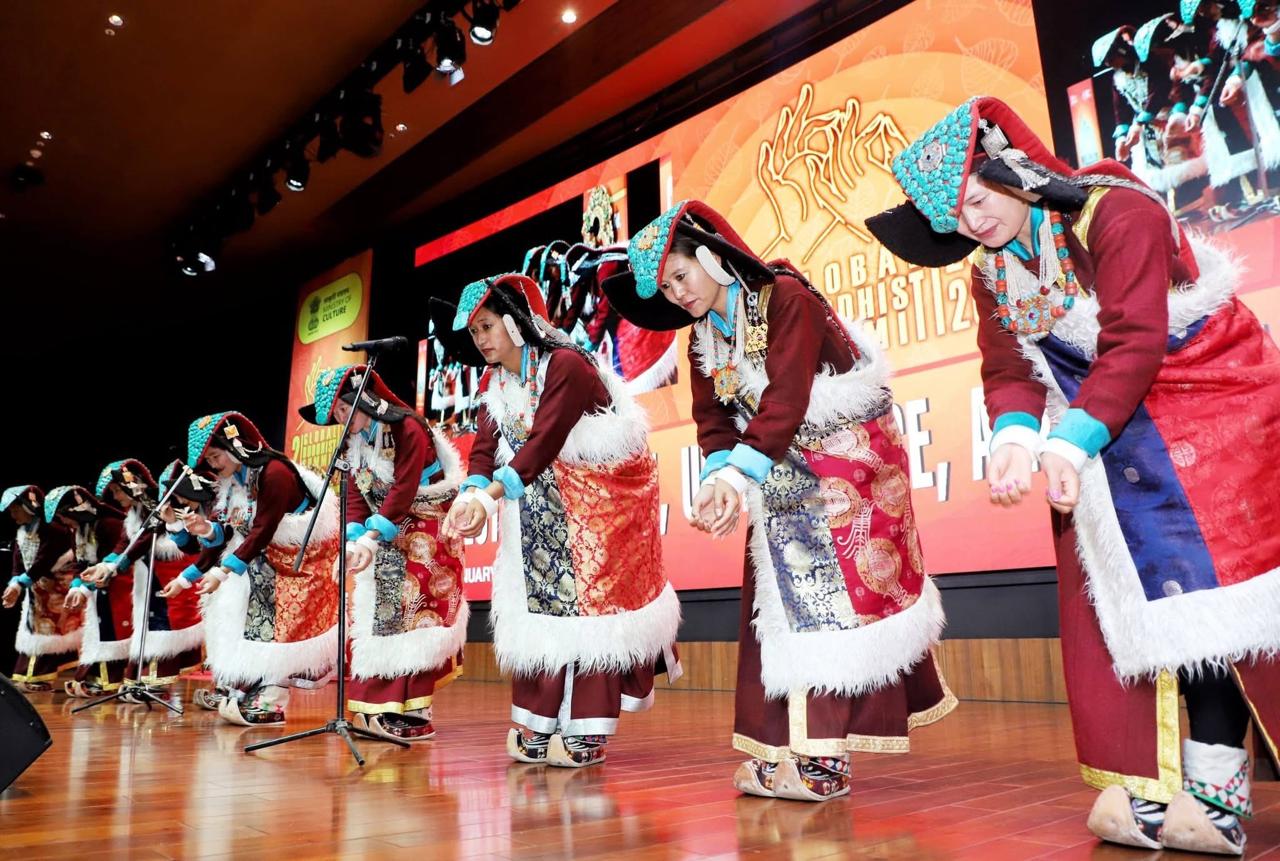 His address highlighted the relevance of Buddhism and its ascendant position as a moral compass for humanity in modern times, with expectations from Buddhist thought and culture measured by how it may guide human action and behavior in the span of history and time. His address also reflected on the conversations on collective wisdom and mutual coexistence and highlighted how these ideas and concepts were reflective of the precepts of the Buddha Shakyamuni on interdependence and compassion in the universe. With both the Sangha and laity having a role to play and to perform, the address sought to highlight the objective of translating these ideals of Buddhism into action so that wisdom is no longer confined to words and discourse and enters the field of practical action and engagement.
 Complementing the intellectual and spiritual dimensions of the Summit, cultural performances were interspersed carefully throughout both days, reinforcing the idea that Buddhism is as much a lived cultural tradition as it is a philosophical and ethical system. During inaugural and concluding segments, performances by the Ladakh State Cultural Group stood out for their powerful expressions of Himalayan Buddhist heritage. Conveying traditional music and dance, the artists spoke of narratives of devotion, resilience, and harmony with nature as lived spirituality among Buddhist communities in the trans-Himalayan region. These performances thus mirrored the continuity of Buddhist traditions across generations and geographies, while celebrating India’s cultural diversity. Earlier, the culture represented at the Summit was the classical music performance of the Karaniya Metta Sutta. Music based on this foundational teaching on loving kindness was very appropriate for the occasion as the Summit theme was full of compassion, non-violence, and goodwill towards all. Essentially, these cultural elements were not merely providing the Summit with its artistic content, but were integral parts of the Summit’s message, equaling philosophy, on the one hand, and providing the audience with its pedagogy on Buddhist tradition, on the other.
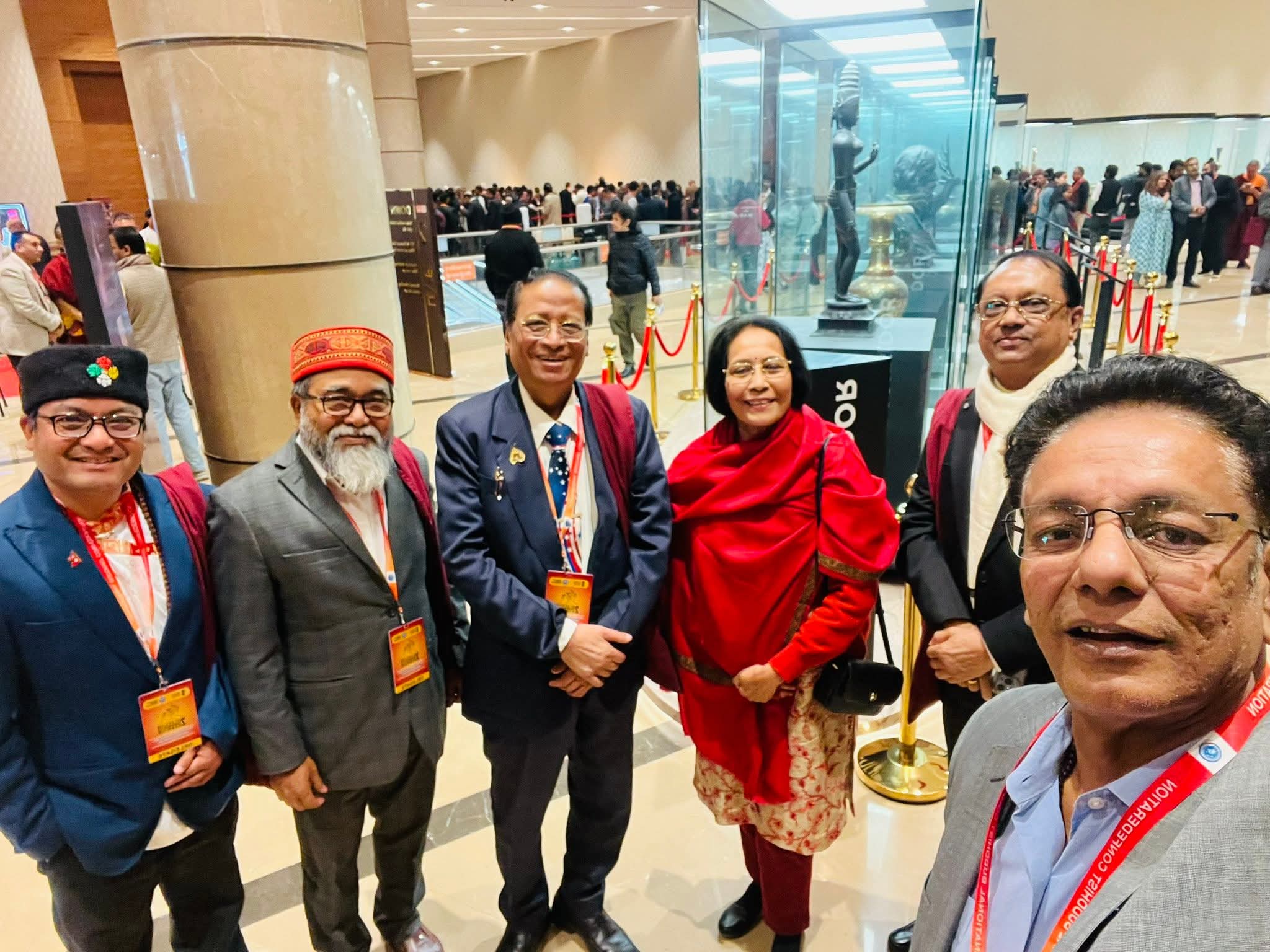
 The symbolic and spiritual highpoint of the Summit was the guided tour of the Holy Relic Exposition at the Qila Rai Pithora Cultural Complex, New Delhi. A highpoint of the Global Buddhist Summit was the visit of around 250 foreign monks and Global Buddhist Summit (GBS) delegates to Qila Rai Pithora Cultural Complex to pay their respects and offer prayers to the Holy relics of the Buddha at the exposition which was inaugurated by the Prime Minister on January 3, 2026. The delegates from overseas and India spent over 2 hours passionately viewing the exhibition and mesmerized by the historical background of the Piprawah relics and the background about how India made efforts to bring back the reliquaries of the Buddha which were taken away from India in 1898 and how they were brought back and united with the other part of the same reliquaries. They appreciated India’s efforts to not only preserve its ancient heritage but also ensure that they are repatriated home. This spiritual exposition changed the Summit experience from one of dialogue to a deeply personal encounter with the Buddhist devotional legacy. The Holy Relics, venerated by all schools of Buddhism, provided an opportunity for personal introspection, reflection, and connection with the rich legacy of the Buddha. For many foreign delegates, this served to highlight the singular role of India for its custodianship of Buddhism.
  Sangha Heads and Venerable monks appreciated the efforts by the Ministry of Culture, Government of India to repatriate the holy relics from abroad, India’s sustained efforts to retain its ancient heritage. Most of the delegates were overawed by the visit to the relic museum and received blessings while some of them even chanted before the holy relics in a peaceful and serene mood. “We are extremely fortunate to be given this rare opportunity to be blessed by the relics of the Shakyamuni, and see the rich collection”, one senior sangha member said. Another mentioned that “This was a spiritual part of the GBS which we never expected but it came our way”. The organizers of the GBS kept this program as a surprise for the participants so that the academic and philosophical aspects are combined with a spiritual experience.
 Institutional Dialogue and Future Planning: Sideline Meetings
Save for its own meetings, it must also be noted that the Summit was an equally significant setting for institutional coordination and forward planning. As part of Second GBS, meetings of the Asian Buddhist Conference for Peace and General Body meetings of the International Buddhist Confederation were organized. The meetings were aimed at increasing regional and global Buddhist cooperation, taking forward future programs, and developing more areas of collaborative activities in terms of peace-building, education, cultural exchange, and humanitarian activities. The presence of such meetings highlights the importance of the Summit as not only a platform for dialogue, but of articulating institutional efforts. Cultural Memory and Soft Power: Buddhism Through Philately
The thematic narrative “Buddhism Through Postage Stamps: A Global Philatelic Journey” by philatelist Vinod Kumar reflected a unique intellectual and cultural dimension of the Summit. This was symbolically in tune with the Summit’s global vision, presenting postage stamps as micro-cultural artifacts that chronicle Buddhism’s historical spread, its sacred geography, and its universal message. World philately represented the voyage of Buddhism-from Bodh Gaya, Lumbini, Sarnath, Kushinagar, Nalanda, Ajanta, and other sacred sites in Sri Lanka, Nepal, Bhutan, Thailand, Myanmar, Cambodia, China, Japan, Mongolia, and others-as a visual and pedagogic civilizational repository. The narrative of the Buddha’s life events, Buddhist symbols, sacred art forms, Vesak celebrations, and peace initiatives through stamps depicted Buddhism as a global heritage tradition, transcending borders and political boundaries. This philatelic narrative fully corresponded to the Summit’s ethos of soft power diplomacy, cultural exchange, and civilizational dialogue-sketching how even a miniature cultural object can serve as a carrier for peace, memory, and spiritual identity.
 A Historic Civilizational Moment: Republic Day and Global Buddhist Presence
Another aspect of the side line activities of the Global Buddhist Summit was the visit of around 60 monks from different countries to watch the Republic Day parade on January 26. The presence of the monks amidst displays of an array of defence equipment and troops created a sombre moment for all those watching the event. This was for the first time in the history of India’s Republic Day Celebrations that such a large and diverse international Buddhist delegation comprising mainly of monks, had witnessed this grand ceremonial occasion together. Symbolic integration of India’s civic identity and its civilization ethos, this move highlighted once again the significance of Buddhism as a force of bridge-making. While India exhibited its military might before the world, the presence of the venerable monks and nuns embodied peace and compassion, conveying a profound message that the resolution of global challenges lies in the path of Dhamma, as often mentioned by our Hon’ble Prime Minister. “It was a thrilling experience,” said a Senior monk. As the parade got over and the group was leaving the stand, three nuns from Vietnam requested if they may stay on since Prime Minister Narendra Modi was walking past the sitting area and they wanted to greet him. Though the rest of the group left, they were obliged by International Buddhist Confederation staff. Later they expressed their delight at seeing the Prime Minister from close quarters. Several photographs were clicked to cherish the special moment so that they could share the experience with others on their return. “It was a once in a lifetime experience for me,” remarked the Nun, later. Together, these two events highlighted the dual essence of India’s identity: a nation rooted in spiritual wisdom and cultural heritage, while simultaneously asserting its democratic strength and sovereignty.
 Conclusion
The Second Global Buddhist Summit emerged as the signature of a great civilizational dialogue, marked by its scale, diversity, and depth of engagement. With over 1,000 delegates representing the great continents, institutions, and traditions, the Summit witnessed the efflorescence of Buddhism as an elliptical global ethical framework for self and social conduct. Melding spiritual insight into the art of governance, economy, science, education, monastic life, cultural expressions, and institutional planning, Second GBS turned Buddhist philosophy into living resources for modern global coexistence. By this very token, where Buddha Dharma informed diplomacy, wisdom guided policy, and heritage shaped collective responsibility, the Summit stands as a signal contribution to contemporary global discourse on peace, sustainability, and shared human values. The academic session’s reflections, cultural performances, and sacred exposition, collectively speaking, produced a holistic closure to the second Global Buddhist Summit. This affirmed that a religion like Buddhism is not only articulated in terms of speeches and presentations but also in terms of rituals, performances, experiences, and shared interventions. The second Global Buddhist Summit thereby successfully articulated the very vision it propounded: “Where wisdom is lived experience, dialogue is devotion, and civilizational heritage is a common path towards global harmony.”-Report by Raju Lama
!!NAMO BUDDHAYA!!


