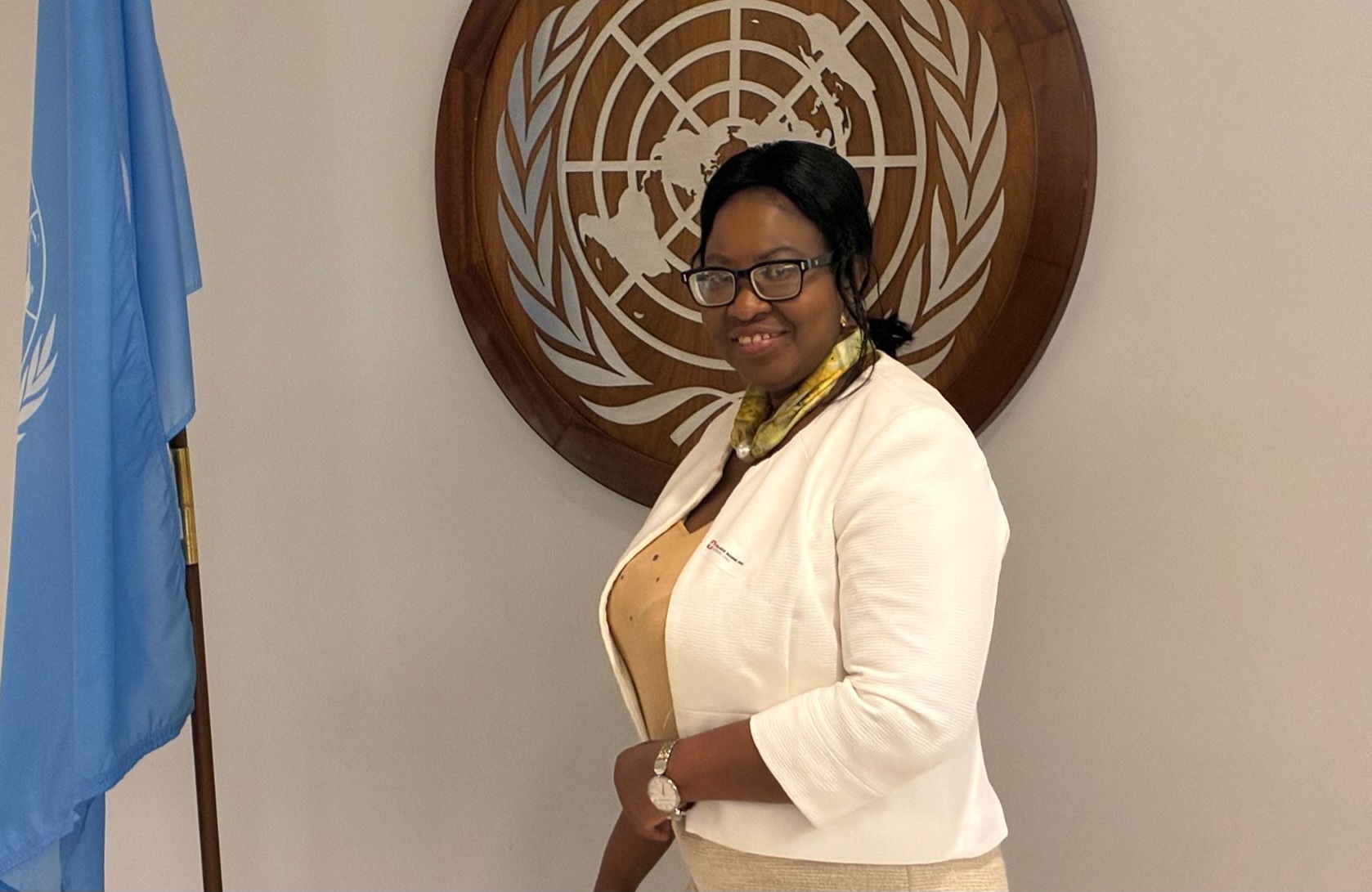
New York- Esther Banquet International CEO, Anne Fasan urges Nigerian leaders and government, African Leaders, policy makers, global stage actors, stake holders to work together and build trust for Africa to become more competitive on the global stage.
She made this call as a Civil Society/NGO in attendance of the 25th session of United Nations committee of Experts on Public Administration (CEPA) held on the 13th–17th April at New York.
CEPA meeting focused on public administrations systems, enhancing accountability, strengthening domestic resource mobilisation, accelerating progress on sustainable development goals (SDG, 2030)and other crucial themes.
In attendance of the meeting was Mr Bala Yusuf Yunisa, office of the senior special assistant to the president on sustainable development goals.
According to Mrs Anne Fasan, the era of dependency must come to an end. For too long, the narrative of African continent has been tied to too much external aid and foreign dictate.
Today, the message to African leaders, policymakers, and stakeholders is clear: Africa must arise to become a formidable competitor on the global stage.
True sovereignty is not granted; it is built through economic resilience and strategic foresight. To achieve genuine self-reliance, we must shift our focus inward and prioritize
Domestic Resource Mobilization (DRM) as the cornerstone of our developmental agenda. Being competitive in the 21st century requires more than just possessing natural resources; it requires the ability to process, value-add, and trade them on our own terms. We must invest in :
• Human Capital: Equipping our youth with the digital and technical skills required for a modern economy.
• Infrastructure: Building the physical and digital trade routes that make the African Continental Free Trade Area (AfCFTA) a reality.
• Innovation: Creating an environment where African tech and industry can thrive without over-reliance on imported solutions.
Relying on volatile foreign aid and high-
interest external debt limits policy space for most African countries and strengthening domestic tax systems in Africa curbing illicit financial flows, and incentivizing local institutional investors, can fund their own healthcare, education, and industrialization.
The Mandate
African leaders and policymakers: the window of opportunity is narrowing. The global landscape is shifting, and those who do not compete will be left behind. We call on you to:
1. Enact policies that protect and promote local industries.
2. Ensure transparency in the management of public funds to build citizen trust.
Foster a business climate that turns African startups into global giants.The time for potential is over; the time for power is now.
Let us build an Africa that does not just participate in the global economy but leads it. She observed most African countries are characterised by weak institutions which needs to be strengthened .


