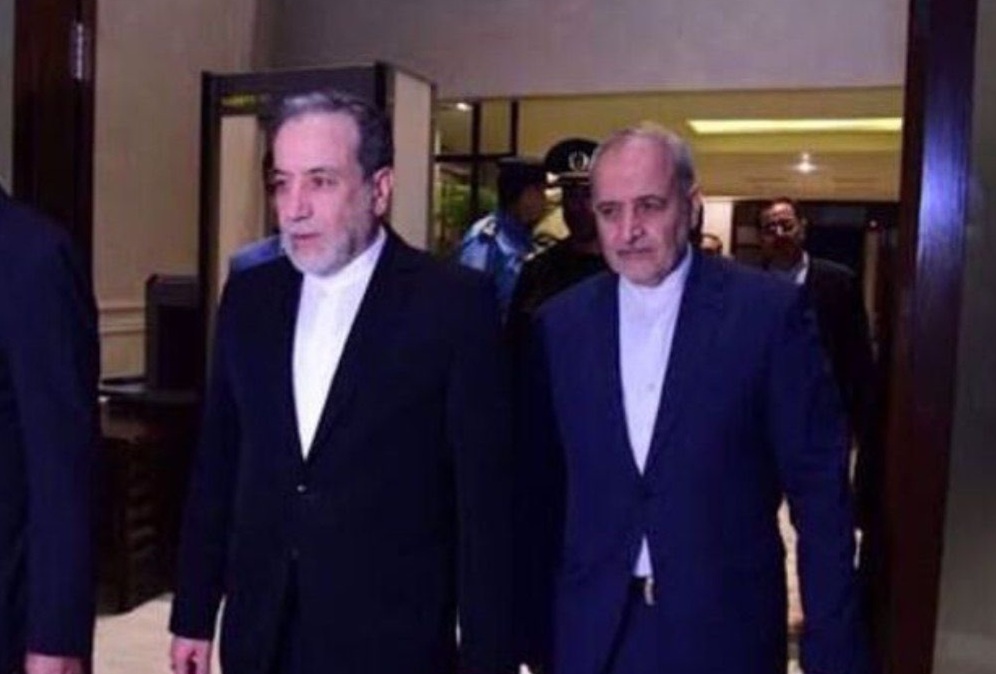
Islamabad, April 26 — Iranian Foreign Minister Seyed Abbas Araghchi returned to Islamabad on Sunday evening for a brief but diplomatically significant stopover following his engagements in Muscat, Oman, as regional efforts to ease tensions between Iran and the United States continue.
Diplomatic sources confirmed that the Iranian envoy, who had earlier held extensive consultations with Pakistan’s civilian and military leadership during his April 24–25 visit, briefly returned to the federal capital before proceeding onward to Moscow.
Araghchi’s aircraft landed at Nur Khan Air Base, with Pakistan providing logistical and aviation facilitation as part of its ongoing support for regional diplomatic engagements.
During his earlier stay in Islamabad, the Iranian foreign minister met Prime Minister Shehbaz Sharif, Chief of Army Staff Asim Munir, and Deputy Prime Minister and Foreign Minister Ishaq Dar. Discussions focused on de-escalation efforts and possible pathways toward a broader understanding between Tehran and Washington.
Sources indicated that Araghchi shared Iran’s proposed “workable framework” aimed at achieving a durable resolution to the ongoing standoff, while appreciating Pakistan’s diplomatic outreach and facilitation efforts. The talks were described as “constructive” and “forward-looking.”
In Muscat, the Iranian foreign minister is understood to have engaged in indirect consultations under Omani facilitation, reflecting the Gulf state’s longstanding role as a quiet intermediary in sensitive negotiations. The discussions reportedly centered on ceasefire possibilities, humanitarian considerations, and mechanisms to reduce tensions in the region. While no formal breakthrough was announced, officials described the exchanges as yielding cautious progress.
Iran has maintained its position that it will not enter negotiations under pressure, particularly in the context of sanctions and security constraints, while reaffirming its core conditions for any potential agreement.
The brief return to Islamabad is seen as part of ongoing coordination with Pakistani authorities, including updates on the Muscat discussions and alignment ahead of the Moscow leg of the visit, where further consultations are expected with Russian officials.
Meanwhile, uncertainty persists around the diplomatic trajectory, with reports suggesting that a planned visit by US envoys to Pakistan has been called off. The development has added complexity to an already delicate process, even as multiple channels of engagement remain active.
Regional observers note that Pakistan, alongside Oman and Russia, continues to play a key role in facilitating dialogue at a time when formal negotiations remain stalled. Despite the absence of a definitive agreement, sustained diplomatic activity indicates that efforts toward de-escalation are ongoing. – Report by Ali Imran Chattha, Pakistan


