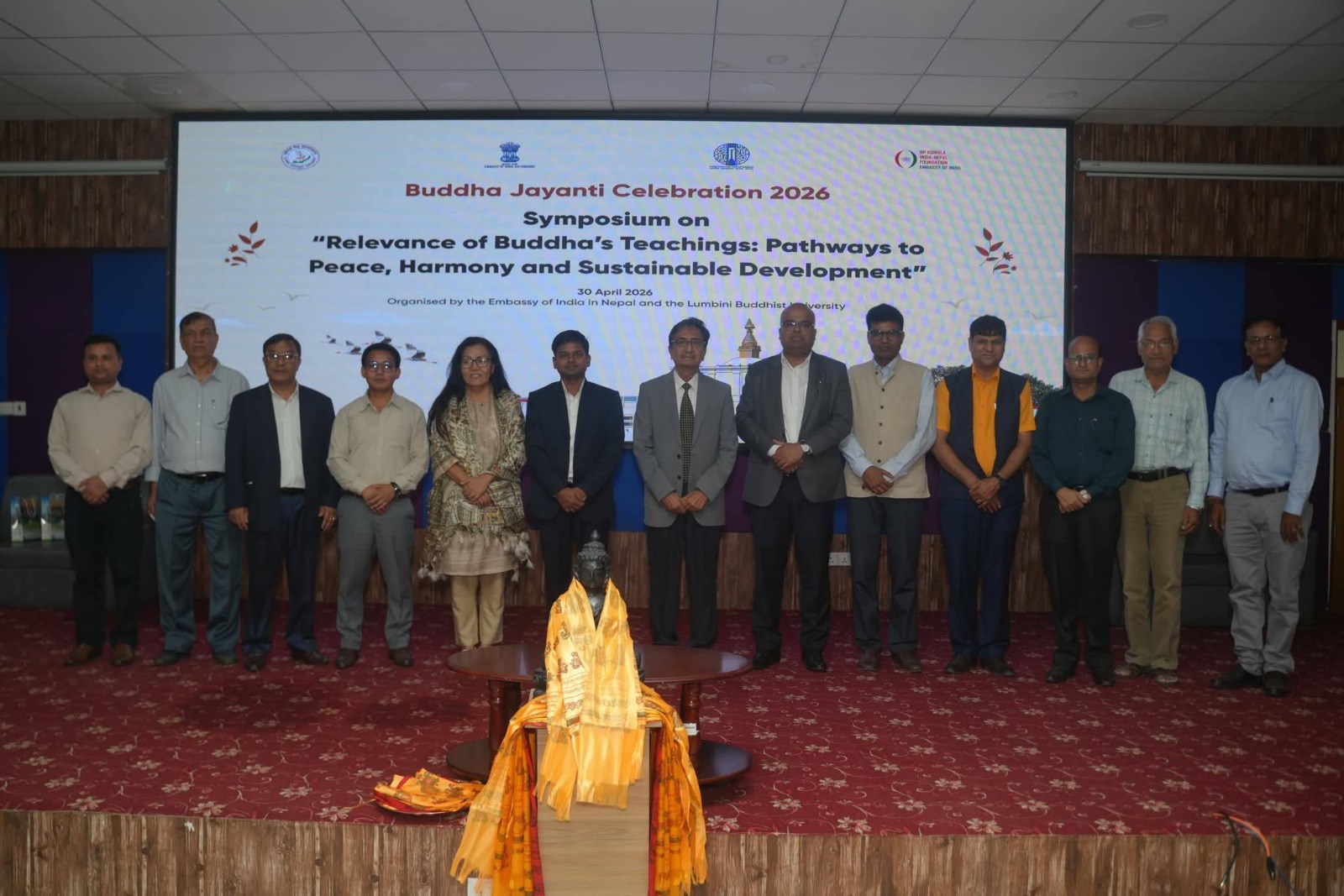
Lumbini. A grand celebration of 2570th Buddha Jayanti was organized at Lumbini, the sacred birthplace of Gautama the Buddha, showcasing a vibrant confluence of cultural, spiritual, and academic collaboration between India and Nepal. The event was organized by the Embassy of India in Nepal in collaboration with the Lumbini Development Trust.
The celebration commenced with a student art exhibition, where young participants depicted the life and teachings of the Buddha through expressive artwork emphasizing compassion and peace. This was followed by a solemn joint chanting and prayer session by monks from both Theravāda and Mahāyāna traditions, including homage to the Buddha through Vandana led by Venerable Vajira Bhante and Venerable Yeshi Dorje along with their teams, creating a spiritually uplifting atmosphere.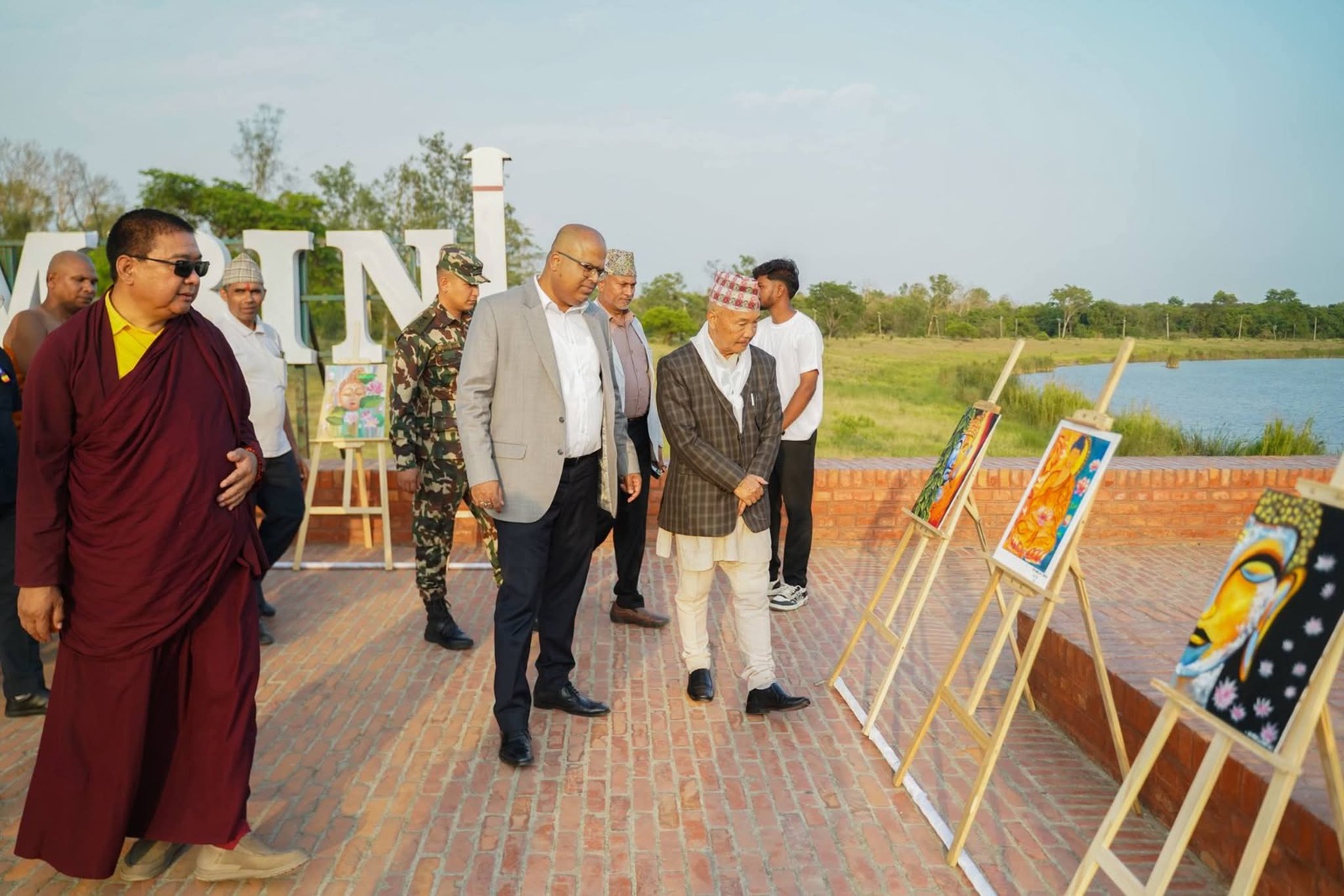
As part of the celebrations, an academic seminar was organized at Lumbini Buddhist University on the theme “Relevance of Buddha’s Teachings: Pathways to Peace, Harmony, and Sustainable Development.” The seminar brought together scholars, academicians, monks, and researchers from India and Nepal to deliberate on the contemporary significance of Buddhist philosophy.
In his inaugural remarks, Dr. Tilak Ram Acharya, Registrar, welcomed the dignitaries and emphasized the deep civilizational linkages between Nepal and India. Chief Guest Dr. Rakesh Pandey underlined the importance of academic dialogue in strengthening bilateral cooperation and advancing the message of Buddha in modern times.
The seminar featured insightful presentations by distinguished speakers. Dr. Kalsang Wangmo (Central University of Jharkhand, India) spoke on “Buddha’s Teachings and Universal Human Values: Pathways to Addressing Global Crises.” Dr. Indra Prasad Kafle discussed the Mahāyāna perspective on peace and sustainable development, while Venerable Vajira Bhante addressed human-centric global crises and Buddhist responses.
The first session was moderated by Prof. Gitu Giri. In the second session, moderated by Mr. Dayanidhi Gautam, Dr. Pranshu Samdarshi (Nalanda University, India) elaborated on Paticcasamuppada (dependent origination) as a framework for global harmony. Dr. Fanindra Kumar Neupane explored poverty and global crises through Abhidhammic philosophy, and Mr. Kamal Thapa highlighted the Buddhist approach to sustainable development.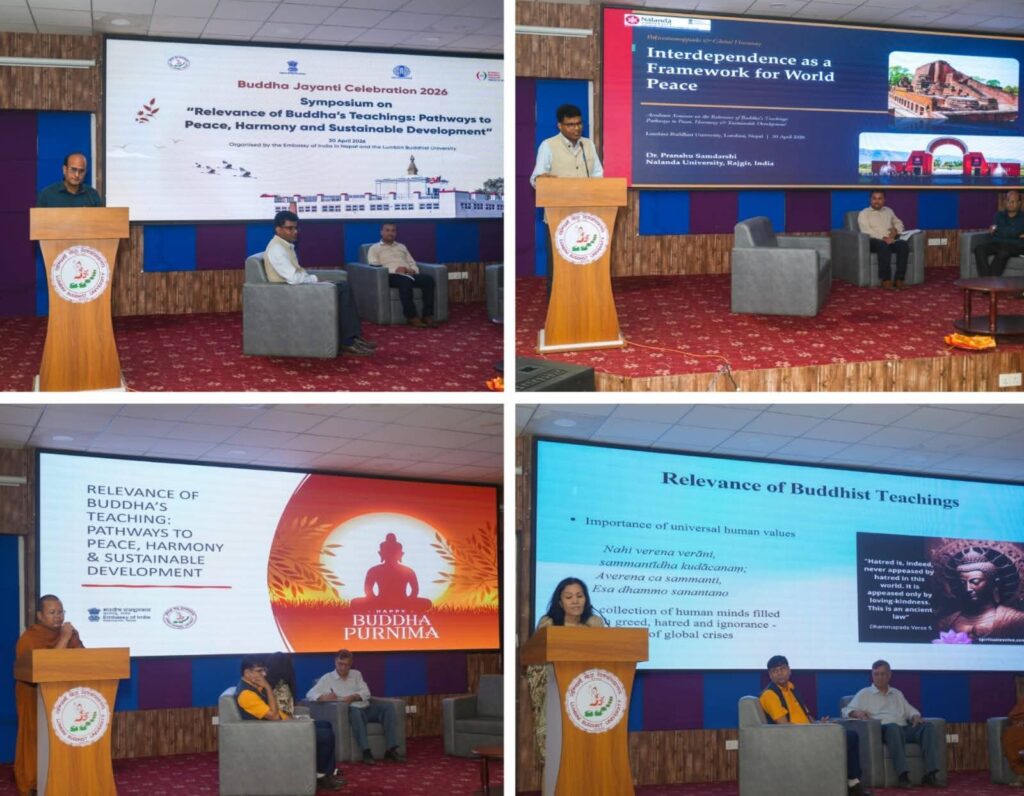
The seminar aimed to critically examine the philosophical foundations of Buddhism and their application to contemporary challenges such as mental health, ethical living, social responsibility, environmental sustainability, and conflict resolution. It emphasized the importance of mindfulness, non-violence, and the Middle Path in fostering individual well-being and societal harmony. The Academic Seminar was coordinated by Prof. Arvind Kumar Singh, Professor, Dr. B. R. Ambedkar Chair for Buddhist Studies (ICCR), who underscored the importance of interdisciplinary dialogue and research collaboration.
The program concluded with a vote of thanks by Dr. Manik Ratna Shakya, Dean, Faculty of Buddhist Studies, followed by felicitation of distinguished guests. Prof. Subarna Lal Bajracharya delivered the closing remarks. Mr. Rajendra Ghimire, Coordinator, International Affairs was the master of the ceremony.
Academic symposium in the forenoon was followed by Painting Exhibition and cultural event at Prince Siddhartha Staue at Mayadevi Temple Complex in the evening. The evening cultural program featured a captivating Kathak dance performance by an Indian Council for Cultural Relations (ICCR) troupe led by Ms. Deepti Gupta, artistically portraying the life and teachings of the Buddha. Complementing this, a musical ensemble led by renowned Nepali sarod maestro Suresh Bajracharya presented a mesmerizing fusion of traditional and contemporary music.
The Honorable Province Chief of Lumbini Province, Krishna Bahadur Gharti Magar, graced the occasion as Chief Guest. In his address, he highlighted the enduring relevance of the Buddha’s teachings in promoting peace, tolerance, and coexistence in today’s global context.
Dr. Rakesh Pandey, Deputy Chief of Mission, Embassy of India in Nepal, and other distinguished dignitaries were also present.This landmark celebration not only reaffirmed the universal message of the Buddha, rooted in wisdom, compassion, and ethical living, but also infused renewed momentum into India-Nepal cultural diplomacy, shared religious heritage, and academic cooperation.


