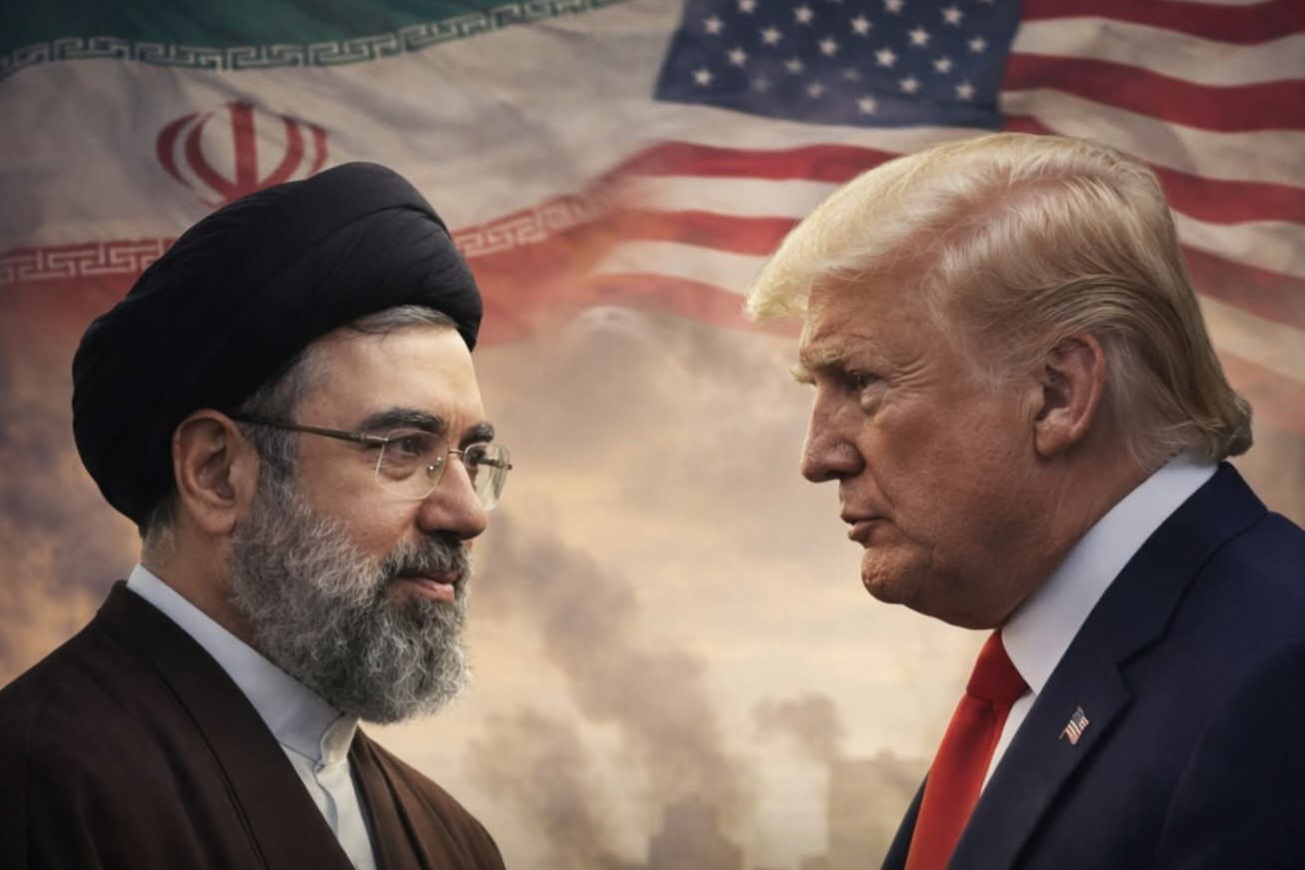
By Raju Lama The drums of war are beating louder in the Middle East, and the consequences are no longer confined to one region. What began as strategic rivalry has now spiraled into a dangerous confrontation between Iran and the United States—two powers whose conflict threatens global stability, economic security, and human life itself.
Recent developments paint a deeply alarming picture. Threats of massive retaliation, attacks on infrastructure, and counter-strikes across the region have pushed tensions to a breaking point. The Strait of Hormuz—one of the world’s most vital energy corridors—has become a geopolitical flashpoint, with warnings that failure to reopen it could trigger devastating escalation.
At the same time, there are faint but critical signals of hope. Reports suggest that mediators are working toward a temporary ceasefire, a fragile first step toward de-escalation. But hope alone is not enough. The world must demand peace—not as an abstract ideal, but as an urgent necessity.
War Has No Winners—Only Expanding Suffering
Modern warfare between powerful nations is not limited to battlefields. It destroys economies, destabilizes regions, and punishes civilians far removed from political decisions. Already, the Iran–US conflict is driving up global fuel prices, disrupting supply chains, and affecting ordinary people worldwide.
History teaches us a harsh lesson: wars in the Middle East do not remain contained. They expand—drawing in allies, igniting proxy conflicts, and leaving long-term scars on societies. The current trajectory risks turning a regional war into a global crisis.
The Failure of Threat-Based Diplomacy
Diplomacy conducted under threats of annihilation is not diplomacy—it is coercion. When negotiations are paired with ultimatums and military pressure, they lose legitimacy and trust. Iran has repeatedly signaled reluctance to negotiate under threat, while the United States continues to assert military leverage.
This cycle of pressure and resistance only deepens mistrust. Real peace cannot be built on fear; it must be built on mutual respect, security guarantees, and a willingness to compromise.
A Critical Window for Dialogue
Despite the hostility, a narrow window remains open. Backchannel diplomacy involving regional and global actors shows that dialogue is still possible. Even amid conflict, both sides have at times indicated openness to negotiations.
This moment must not be wasted. A temporary ceasefire—if achieved—should not be seen as an end, but as the beginning of a sustained diplomatic process addressing core issues: nuclear concerns, regional security, and economic sanctions.
The Role of the International Community
Peace between Iran and the United States is not just their responsibility—it is a global imperative. The international community, including the United Nations and neutral mediators, must intensify efforts to:
– Enforce an immediate ceasefire
– Protect civilian infrastructure and lives
– Facilitate inclusive, multilateral negotiations
– Prevent further militarization of the region
– Silence or neutrality in such a moment is not diplomacy—it is complicity.
Conclusion: Choose Dialogue Over Destruction
The world stands at a crossroads. One path leads to escalation, devastation, and a wider war whose consequences may last generations. The other leads to dialogue, compromise, and a fragile but necessary peace.
The choice should not be difficult.
Peace is not weakness. It is wisdom.
And in the case of Iran and the United States, it may be the only path that prevents a global tragedy. #Writer is Editor of Times Asian and International President of SAARC Journalist Forum


