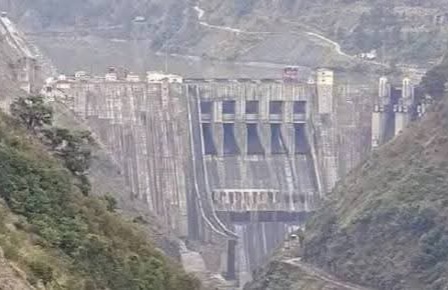
Islamabad/New Delhi — Tensions between Pakistan and India have sharply intensified once again, raising fears of a potential military confrontation in May 2026, barely a year after both nuclear-armed neighbors came dangerously close to conflict following border skirmishes. The latest flashpoint centers on a sudden and alarming reduction in water flow in the Chenab River, which Pakistani officials attribute to India’s actions upstream at the Baglihar Dam.
According to official data, water flow at Head Marala dropped dramatically from approximately 20,930 cusecs to just 9,037 cusecs within a short span of time, a decline that has triggered serious concern in Pakistan’s agricultural heartland of Punjab. The timing is particularly critical, as farmers are in the midst of sowing Kharif crops, making water availability essential for food security and economic stability. Pakistani authorities allege that India has deliberately restricted water to fill the Baglihar reservoir, a move they describe as a violation of the Indus Waters Treaty.
The dispute has reignited longstanding concerns over India’s hydroelectric projects in Jammu and Kashmir, with Islamabad arguing that such infrastructure allows New Delhi to manipulate river flows in ways that undermine the treaty’s framework. Although the Baglihar Dam dispute was previously examined through international arbitration rather than the International Court of Justice, a 2007 neutral expert ruling acknowledged certain Pakistani objections and recommended design modifications. Pakistani officials now contend that India continues to act in disregard of both the spirit and technical constraints of that decision.
The situation has been further inflamed by increasingly aggressive rhetoric on both sides. Indian Defence Minister Rajnath Singh had earlier issued stern warnings emphasizing India’s resolve to safeguard its strategic interests, statements that were widely interpreted in Pakistan as veiled threats, particularly in the context of water disputes. In response, Pakistani leadership has adopted an equally hardline stance.
Prime Minister’s adviser Rana Sanaullah warned that any attempt to block Pakistan’s water could provoke a direct response, including the possibility of targeting the Baglihar Dam — a statement that significantly raises the stakes and signals a shift from diplomatic protest to potential military escalation.
Observers note troubling parallels with last year’s crisis, when escalating tensions along the Line of Control nearly spiraled into open conflict. The current pattern — marked by resource pressure, sharp political statements, and heightened military alertness — suggests a familiar and dangerous trajectory. Analysts caution that while full-scale war remains unlikely due to nuclear deterrence, the risk of limited conflict or miscalculation is higher than at any point in recent months.
At its core, the unfolding crisis underscores how water, once governed by one of the world’s most resilient treaties, is increasingly becoming a strategic weapon in South Asia. With diplomatic channels under strain and mutual trust eroding, the coming weeks will be critical in determining whether restraint prevails or whether the region edges closer to another confrontation. – Report by Ali Imran Chattha


