By Raju Lama
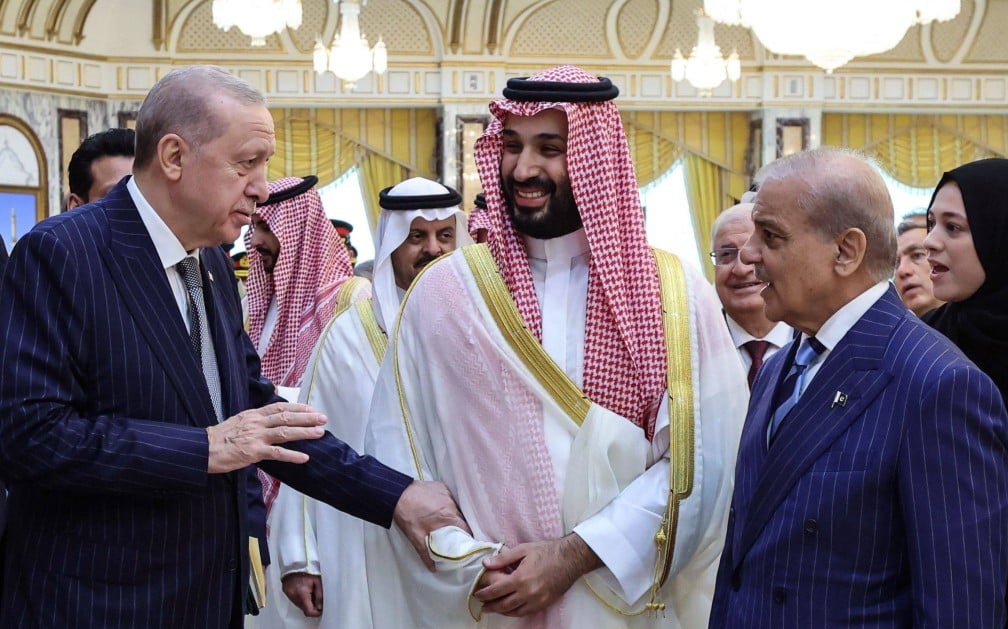
The signing of a new mutual defence agreement between Pakistan, Saudi Arabia and Türkiye marks an important development in the changing security architecture of the Global South. Signed in Mecca on August 7, 2026, the agreement declares that an armed attack against any one of the three countries will be regarded as an attack against all three, while committing the partners to deeper defence cooperation.
The agreement comes at a time when countries across Asia, the Middle East, Africa and Latin America are increasingly questioning whether traditional security arrangements dominated by Western powers remain sufficient for their national and regional interests.
Rather than viewing the pact simply as a military alliance, it is more useful to understand it as part of a broader movement toward strategic autonomy, regional cooperation and a more multipolar international order.
A New Security Geometry
Pakistan, Saudi Arabia and Türkiye bring different but complementary strategic assets to the partnership. Pakistan possesses one of the world’s significant military capabilities and is a nuclear-armed state with extensive experience in conventional warfare, counterterrorism and military training. Saudi Arabia provides enormous economic resources, energy significance and a central position in the Gulf and Islamic world. Türkiye, meanwhile, combines NATO membership with a growing indigenous defence industry, an increasingly active foreign policy and considerable military capabilities.
Their cooperation therefore connects South Asia, the Middle East and the wider Eurasian strategic space. The agreement also builds upon the Pakistan-Saudi Strategic Mutual Defence Agreement signed in September 2025. Analysts have described that earlier agreement as a development capable of creating new security linkages between the Middle East and South Asia. The inclusion of Türkiye gives the relationship a substantially wider geopolitical dimension.
Global South and Strategic Autonomy
For many countries of the Global South, the central question is no longer whether to choose between Washington, Beijing, Moscow or other major powers. Increasingly, the objective is to develop the ability to work with multiple centres of power without becoming dependent on any single one.
The Pakistan-Saudi-Türkiye arrangement fits this broader trend. The three countries maintain relationships with the United States, China, Europe, Russia and other powers, but each also seeks greater freedom of strategic action. Türkiye remains a NATO member; Saudi Arabia has longstanding security ties with Washington; and Pakistan maintains important defence and economic relations with China while also engaging with the United States and Gulf countries.
This makes the new arrangement different from a conventional Cold War-style bloc. It may instead represent a form of middle-power coalition building, in which states cooperate on security while preserving flexibility in their wider foreign policies.
A recent analysis in Global Asia similarly identified the possibility of a new middle-power bloc centred on Pakistan, Saudi Arabia and Türkiye, describing the emerging model as flexible, regionally anchored and driven by strategic autonomy.
Why the Pact Matters to the Global South
The significance of the agreement extends beyond the three signatories.
First, it demonstrates that countries outside the traditional great-power centres are increasingly willing to develop their own security mechanisms.
Second, it could encourage greater defence-industrial cooperation among developing and emerging economies. Türkiye’s rapidly expanding defence industry, Pakistan’s military expertise and Saudi Arabia’s financial resources could create opportunities for joint production, technology cooperation, training and defence investment.
Third, the pact could strengthen political coordination among countries of the Global South on issues ranging from regional security to energy, trade, counterterrorism and diplomatic crisis management.
Fourth, it may contribute to the continuing transition from a predominantly unipolar international system toward a more multipolar order.
This does not necessarily mean replacing Western institutions. Instead, it could mean that emerging powers demand greater influence in determining the rules and institutions of international security.
A Message to the Major Powers
The agreement also sends a message to major powers: regional countries increasingly want to have a greater say in their own security.
Iran’s initial response is particularly notable. On August 10, Iranian Foreign Ministry spokesman Esmaeil Baghaei said Tehran saw no reason to fear the pact and described regional security cooperation and greater regional self-reliance as potentially positive if it is inclusive and addresses genuine security threats.
That response illustrates the complicated nature of the new security environment. The pact could be interpreted as deterrence by its members, but neighbouring states may also worry about the creation of competing blocs.
The challenge will therefore be to ensure that stronger regional defence cooperation does not automatically produce a new cycle of confrontation.
Implications for South Asia
For South Asia, Pakistan’s participation is particularly significant. India will closely watch how the agreement develops, especially because Pakistan and India remain strategic rivals. The pact does not publicly identify India as an adversary, and the three signatories have presented their cooperation as defensive.
Nevertheless, India’s policymakers will have to consider how deeper Pakistan-Türkiye-Saudi military cooperation could affect the regional balance. At the same time, India remains an important Global South power with its own strategic partnerships involving the United States, Russia, Europe, Japan, the Gulf and other countries.
The development therefore reinforces a broader reality : South Asia is becoming increasingly interconnected with Middle Eastern and Eurasian security calculations.
The traditional separation between South Asian security and Middle Eastern security is becoming increasingly difficult to maintain.
The China Factor
China is another major actor with an important stake in the emerging strategic environment.
Pakistan is a key partner of China through the China-Pakistan Economic Corridor and the wider Belt and Road Initiative. Saudi Arabia has developed increasingly important economic and diplomatic relations with Beijing, while Türkiye also maintains extensive economic links with China.
The trilateral agreement could therefore coexist with Chinese engagement rather than necessarily compete with it.
For Beijing, the key question will be whether the new security framework contributes to stability or creates additional geopolitical competition in regions where China has major economic interests.
Beyond a “Muslim NATO” Narrative
There has been considerable speculation about whether the pact could become an “Islamic NATO.” Such a description may be politically attractive, but it risks oversimplifying the motivations of the three countries.
Türkiye is a NATO member. Saudi Arabia has traditionally relied heavily on Western security relationships. Pakistan has deep strategic ties with China and maintains relations with both Western and non-Western powers.
Their interests are therefore not identical. The more accurate description may be a flexible strategic partnership among three influential Muslim-majority states, combining defence cooperation with broader geopolitical hedging.
Whether the arrangement eventually develops into a fully integrated military structure will depend on future decisions concerning joint command structures, intelligence sharing, military exercises, defence production, logistics and the circumstances under which the mutual-defence clause would be activated.
Opportunities and Risks
The agreement offers significant opportunities for the Global South. It could encourage greater South-South cooperation, promote defence-industry partnerships, strengthen regional deterrence and provide countries with additional diplomatic options.
But there are also risks. A new military alignment could contribute to an arms race. Rival powers may respond by strengthening their own alliances. Different strategic priorities among the three members could eventually create tensions. Most importantly, ambiguity over what constitutes an “attack” and what assistance members would actually provide could become problematic during a crisis.
Therefore, the long-term success of the pact will depend not simply on military strength but on strategic communication, diplomatic restraint and institutional clarity.
A Test for the Multipolar World
The Pakistan-Saudi Arabia-Türkiye defence agreement is ultimately bigger than a three-country military arrangement. It reflects a world in which emerging and middle powers increasingly seek to shape their own security environment rather than simply operate within structures designed by the traditional great powers.
For the Global South, the most important lesson is that strategic autonomy does not necessarily mean isolation from the West or alignment against it. It can mean maintaining the ability to cooperate simultaneously with different powers while protecting national and regional interests.
The new trilateral pact could therefore become an important experiment in South-South strategic cooperation.
Its success, however, should not be measured by how quickly it expands or how many weapons its members acquire. It should be measured by whether it contributes to stability, prevents conflict, strengthens regional dialogue and gives developing and emerging countries a more meaningful voice in the international security system.
The world is moving toward greater geopolitical competition and fragmentation. In that environment, the Global South has an opportunity to become not merely an arena of great-power rivalry, but an active architect of a new international order. The Pakistan-Saudi Arabia-Türkiye partnership may be an early indication of that transformation.
*Writer is International President of the SAARC Journalist Forum and Editor in Chief of Times Asian


