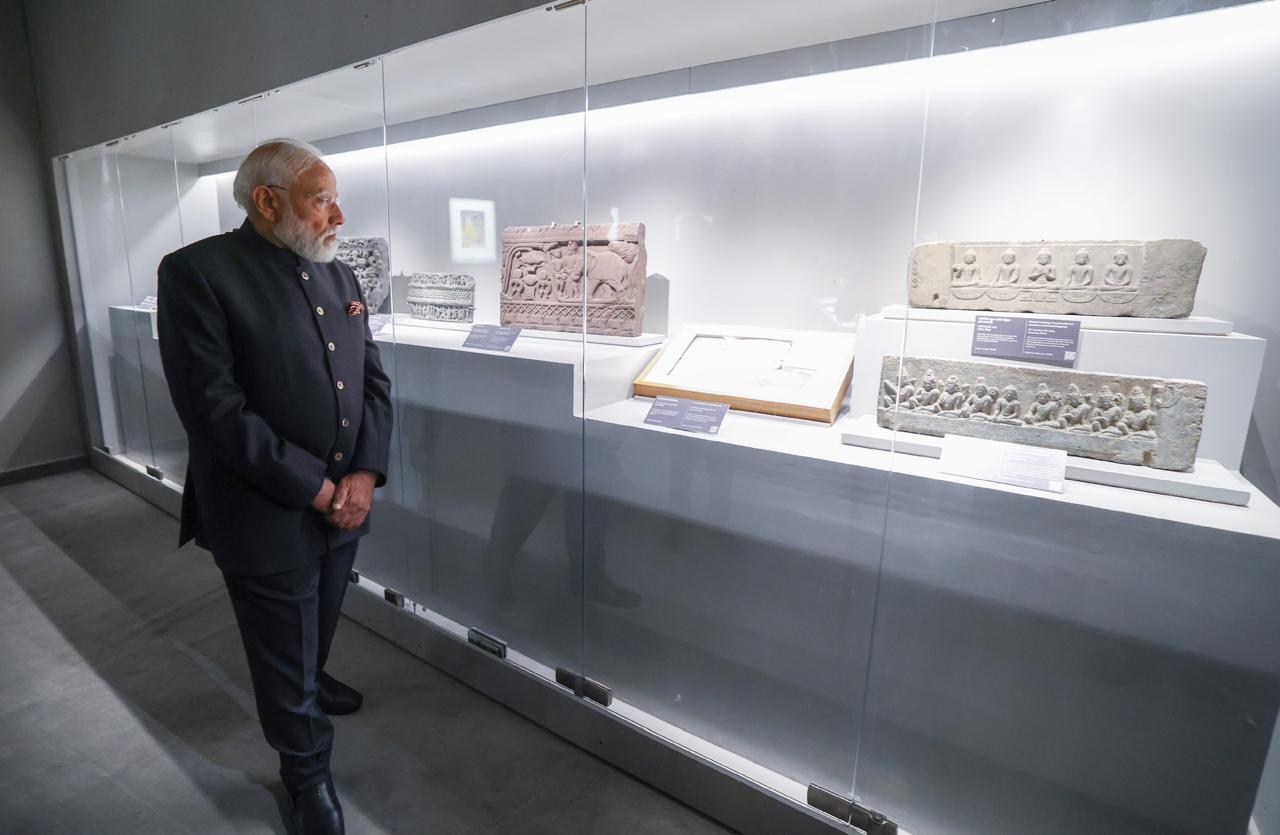
New Delhi. The Grand International Exposition “The Light and the Lotus: Relics of the Awakened One” the holy jewel relics of the Buddha was inaugurated by Indian Prime Minister Narendra Modi on Saturday at the historic Fort ‘Rai Pithora’, a 1052 – c.1060 CE ancient complex, known as the “First city of Delhi”. The exposition will run for the next three-months.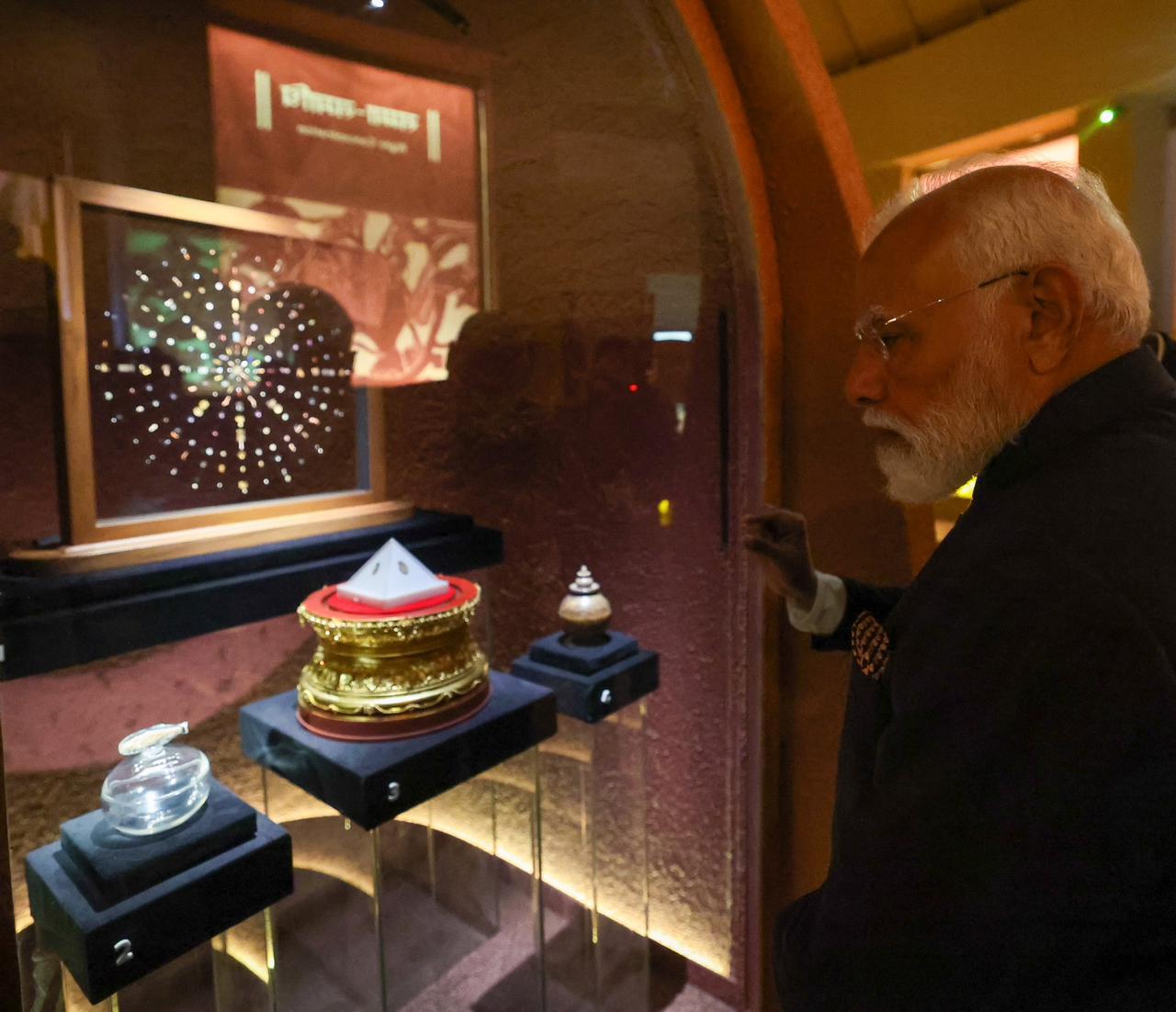
Curated under the theme “The Light and the Lotus: Relics of the Awakened One,” this landmark exposition brings together for the first time in over a century the most comprehensive assemblage of the sacred Piprahwa Relics, the Piprahwa Stupa in Uttar Pradesh, northern India. It is the site believed to be associated with ancient Kapilavastu, the homeland of Gautama Buddha. It is believed that the Buddha’s own Sakya clan had built this stupa to honour the holy relics of their ‘illustrious kinsman’ Gautama Buddha.
Speaking on the occasion, the Indian Prime Minister, Mr Narendra Modi said: “After a wait of 127 years, India’s heritage has returned, and the nation’s treasured legacy has come back home. From today, the people of India and Buddhists worldwide will have the opportunity to view and pay reverence to these holy relics and seek blessings from the ‘Awakened One’ during the public viewings. India stands firm as a protector and preserver of the Buddhist global heritage,” he said.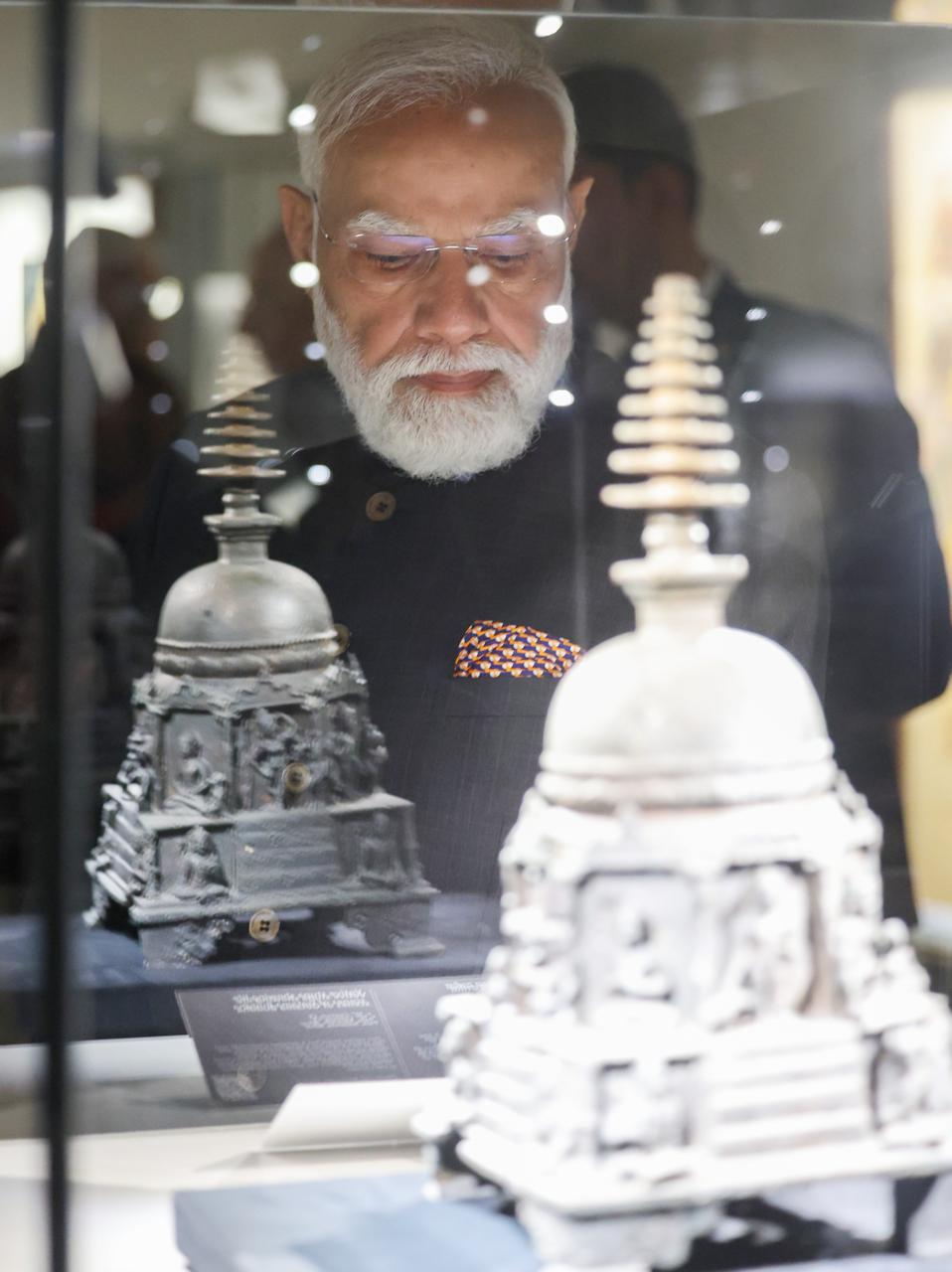
The display showcases over 80 exceptional objects, dating from the 6th century BCE to the present day. These include sculptures, manuscripts, thangkas, ritual objects, reliquaries, and jewelled treasures. At its core is the monolithic stone coffer in which the sacred relics were originally discovered.
Discovered in 1898, by British civil engineer William Claxton Peppé the Piprahwa relics, the mortal remains of the Buddha, hold a central place in the archaeological study of early Buddhism. These are among the earliest and most historically significant relic deposits directly connected to Shakyamuni Buddha.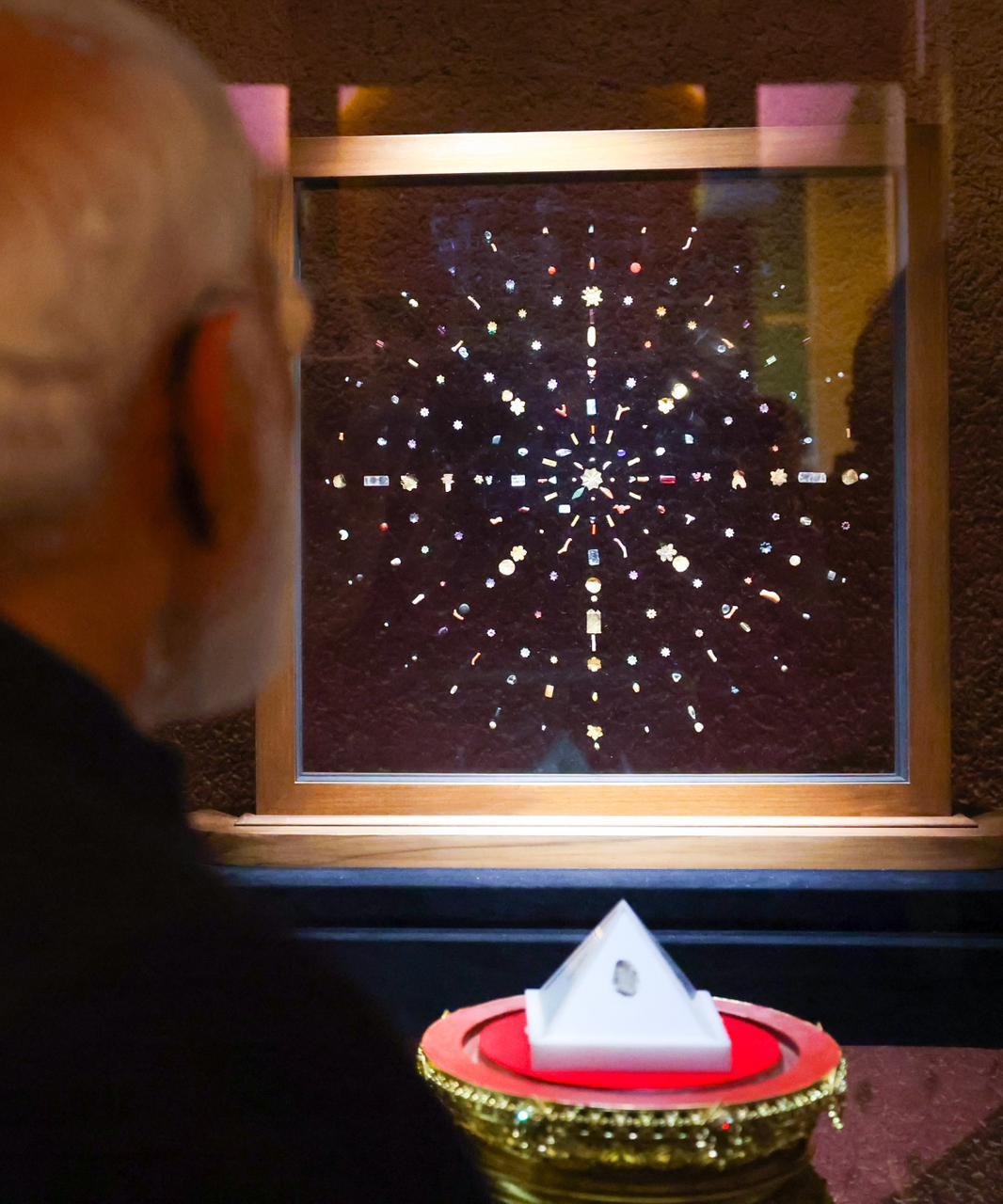 Enshrined by His followers around the 3rd century BCE, they have long held immense spiritual value for the global Buddhist community and represent one of the most important archaeological discoveries in India’s history.
The inauguration was attended by senior government elected representatives, ministers, members of the diplomatic corps, ambassadors, venerable Buddhist monks, senior government officials, scholars, heritage experts, members of the art fraternity, students, and followers of Buddhism from India and abroad.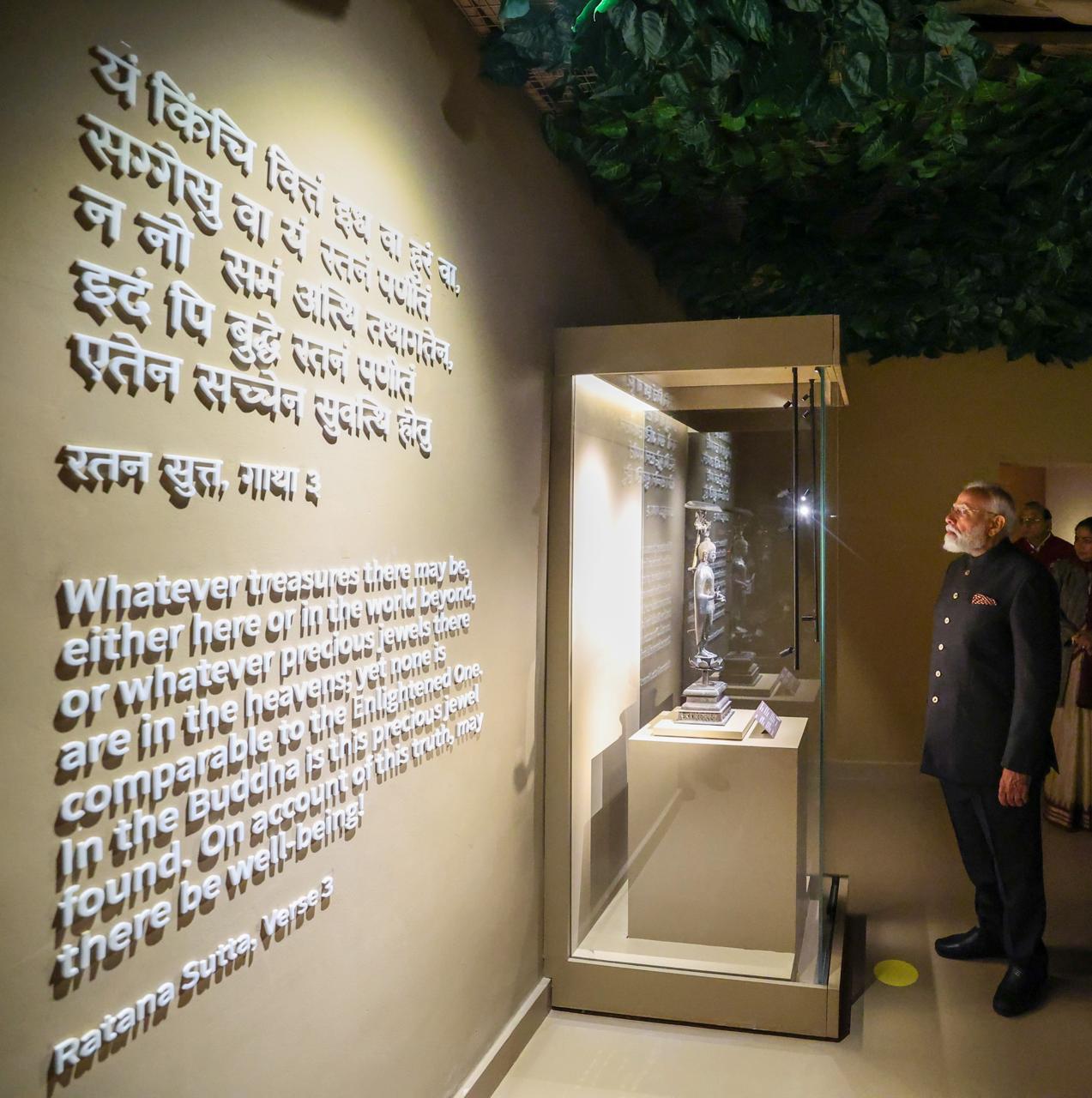
The 1898 excavated relics at Kapilavastu, and later excavation findings from the 1972–75 were partly preserved at the Indian Museum, Kolkata, and a large portion were in the private collection of the Peppé family in the UK. The latter were slated for auction in Hong Kong, in May 2025. However, the sacred artefacts were successfully secured by the Ministry of Culture following the decisive intervention of the Government of India that halted their auction abroad, reflecting the Indian Government’s unwavering commitment to preserving India’s cultural and spiritual heritage.
Reflecting on the appropriation of holy relics and other cultural heritage objects, Prime Minister Modi said that “slavery went beyond political and economic control, it eroded cultural heritage too. The departure of the holy relics from India and their eventual return are both significant lessons. These relics were mere antique pieces to be auctioned by those who took away our heritage. But they are our revered deity, an inseparable part of our civilization, therefore India prevented the auction.”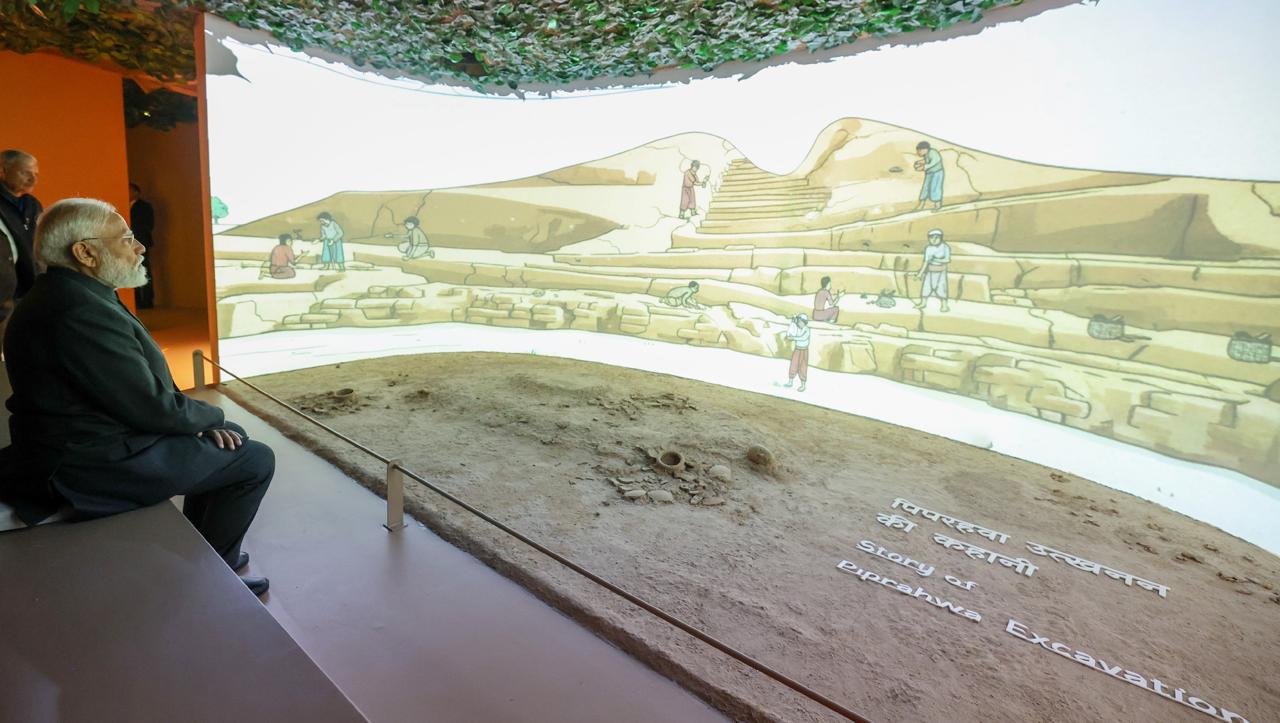
In recent years, India’s global engagement has increasingly drawn upon its civilisational and spiritual heritage and as a result to-date, 642 antiquities have been repatriated to India, with the return of the Piprahwa relics representing a landmark achievement in heritage preservation.
Prime Minister Modi said that the shared Buddhist heritage is proof that India is not merely connected through politics, economy and diplomacy but through deeper bonds.
“We are connected through mind and emotions, through faith and spirituality. India is not only the custodian of Lord Buddha’s sacred relics but also the living carrier of his tradition. Relics of Lord Buddha from Piprahwa, Vaishali, Devni Mori and Nagarjunakonda are a living presence of Buddha’s message,” he said. He also mentioned instances where India has helped other countries in restoration and conservation of Buddha sites of historical importance.


