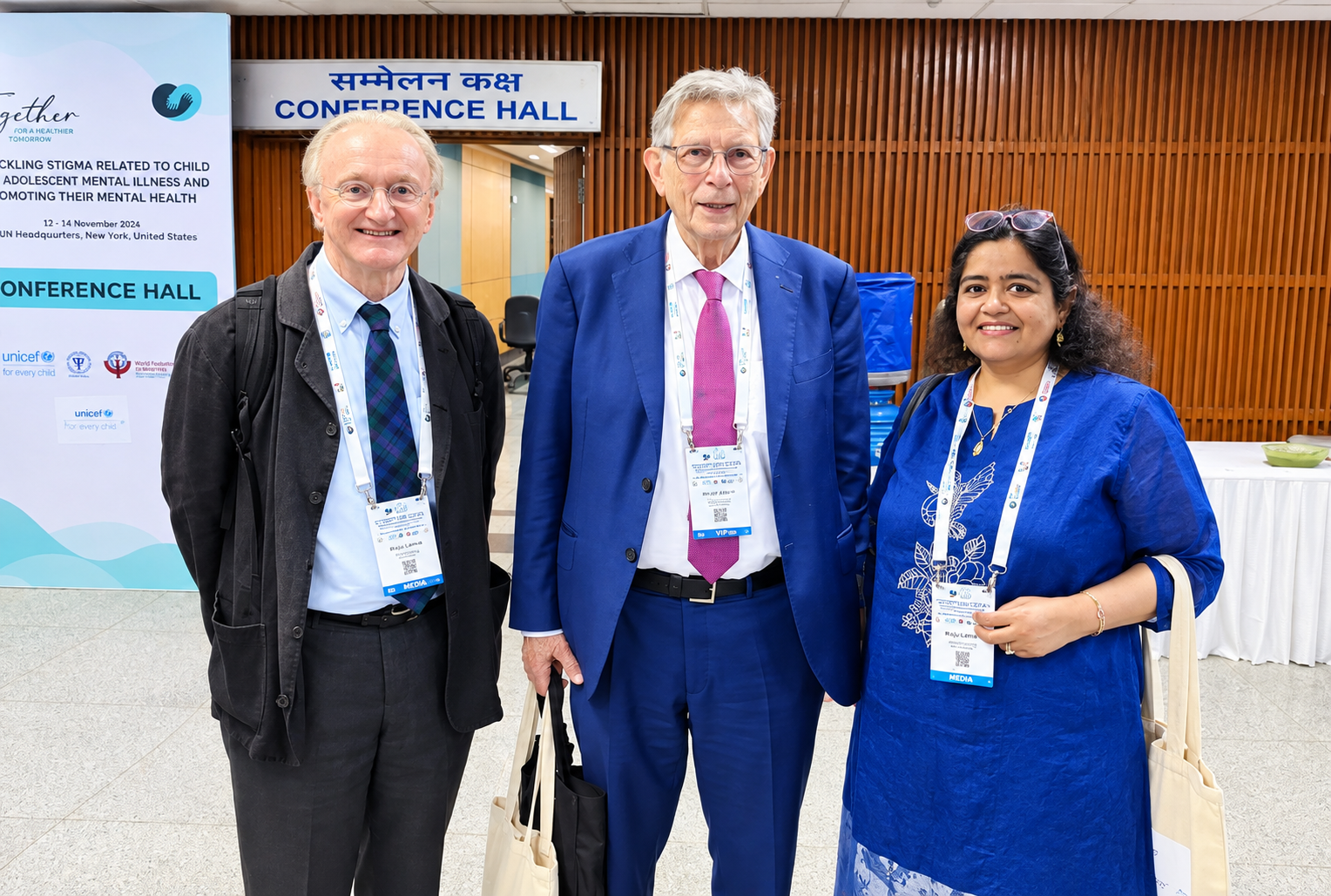
New Delhi | 17 November 2026 – Psychiatrist and mental-health advocate Dr. Aninda Sidhana attended the 11th Together Against Stigma (TAS) Conference, held at the All India Institute of Medical Sciences (AIIMS), New Delhi, from November 12 to 14, joining international conversations on discrimination, youth wellbeing and stigma-free access to mental healthcare.
The event, organised by The George Institute for Global Health in collaboration with the Department of Psychiatry at AIIMS New Delhi and UNICEF India, with support from the World Psychiatric Association and World Association of Social Psychiatry, was the first TAS conference hosted in a low- or middle-income country.
During the conference, Sidhana had the opportunity to meet Prof. Sir Graham Thornicroft and Prof. Norman Sartorius, whose longstanding work has helped shape international research and advocacy on mental-health stigma. A conference plenary featuring the two scholars examined progress made and the barriers that remain to effective, equitable care.
A major theme in Sidhana’s post-conference reflections was the importance of moving beyond awareness campaigns. She highlighted the need for respectful treatment, confidential and accessible services, and meaningful participation by people whose lives are directly affected by mental-health systems.
Sidhana offered particular appreciation for youth mental-health advocate Parth Sharma and the emphasis on intersectionality and lived experience. She stressed that young people should be partners in shaping research, services and policy, rather than invited to share their experiences without influence over decisions.
She also visited the display of RAHAT Charitable & Medical Research Trust, whose Youth for Emotional and Social Support (YESS) programme develops campus-based peer-support networks and pathways to appropriate assistance. The programme reflects a growing interest in complementing professional services with earlier, community-based support.
A BRICS High-Level Panel at TAS highlighted school-based interventions, community mental healthcare, policy reform and cross-country cooperation. These priorities, Sidhana noted in her reflections, are relevant to strengthening services for children, adolescents and families in culturally diverse settings.
Sidhana also serves as a Regional Content Reviewer with the Global Mental Health Action Network’s Geography of Stigma initiative, which seeks to amplify different experiences of mental-health stigma across communities and countries.
The wider takeaway, she emphasised, is that progress should be judged not only by improved public awareness, but by whether people can seek care, participate and live with dignity.


