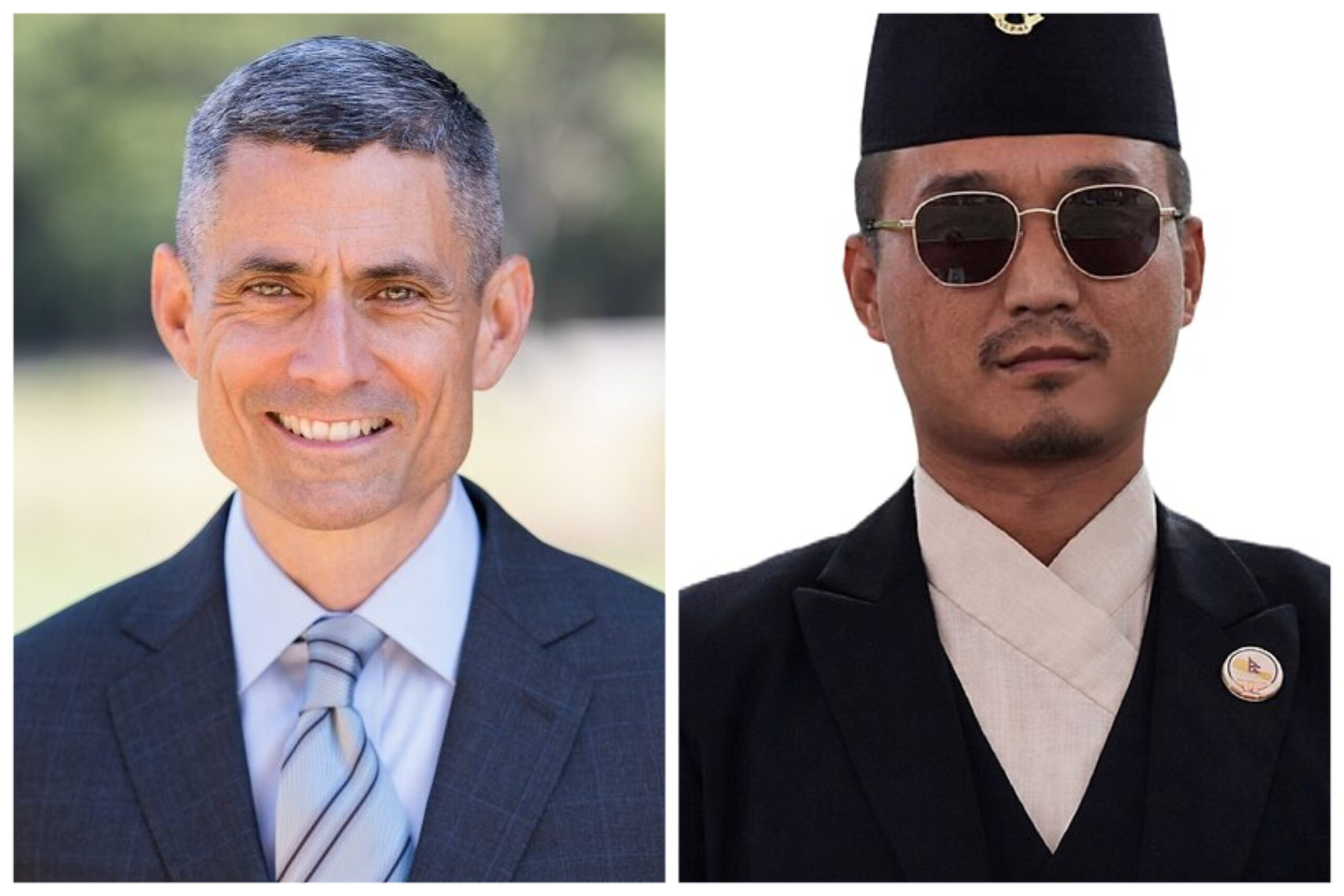
By Raju Lama
The overlap of a high-level U.S. visit and fresh accusations against Nepal’s Home Minister has created a combustible political moment in Kathmandu. What might otherwise have been routine diplomatic engagement has instead become a referendum on credibility, transparency, and the state’s grip on internal integrity.
At the center are allegations—claims circulating in political and media circles that Gurung has links, direct or indirect, with individuals associated with criminal networks, alongside questions about opaque investments in the share market. These are serious assertions. But it’s important to draw a clear line: allegations are not proof. To date, what is publicly visible remains contested, politically amplified, and, in key parts, unverified.
Even so, the political impact is immediate. As Home Minister, Gurung oversees law enforcement and internal security. Any suggestion—substantiated or not—of proximity to criminal actors strikes at the heart of institutional trust. It gives opposition parties a potent narrative: that the guardian of law and order may himself be compromised. In Nepal’s already polarized environment, that narrative travels fast.
The timing magnifies everything. With a senior U.S. official in Kathmandu, governance standards, rule of law, and anti-corruption commitments come under implicit international scrutiny. Washington’s engagement with Nepal often emphasizes transparency and democratic accountability. In that light, even unproven claims can cast a shadow, complicating optics for both sides—Nepal’s government and its foreign partners.
There is also a market and ethics dimension. Questions about “untransparent” share investments tap into a broader public anxiety about insider access, regulatory weakness, and political-business entanglement. If a sitting Home Minister is perceived to have undisclosed or conflicted financial interests, it fuels demands for asset disclosure, independent audits, and stricter oversight of public officials’ market activities.
However, we should resist a rush to judgment. Due process matters. Nepal’s institutions—anti-corruption bodies, financial regulators, and, if necessary, the courts—must be allowed to examine any evidence thoroughly. A democracy is tested not by the absence of allegations, but by how it investigates them: impartially, transparently, and without political interference.
For Gurung, the path forward is clear if he intends to contain the damage: proactive transparency. A comprehensive public disclosure of assets, clarification of any financial dealings, and openness to independent review would shift the conversation from speculation to facts. Silence or deflection, by contrast, risks deepening suspicion.
For the government, the stakes are broader. This episode is not just about one minister; it is about institutional credibility during a moment of international engagement. Handling the situation with rigor—neither dismissing concerns nor weaponizing them—will signal whether Nepal can balance domestic accountability with diplomatic priorities.
Bottom line:
The convergence of diplomatic attention and domestic allegations has turned Sudhan Gurung into a litmus test for governance in Nepal. The outcome will depend less on rhetoric and more on evidence, transparency, and the integrity of the investigative process. # Writer is Editor of Times Asian and International President of SAARC Journalist Forum


