By Raju Lama
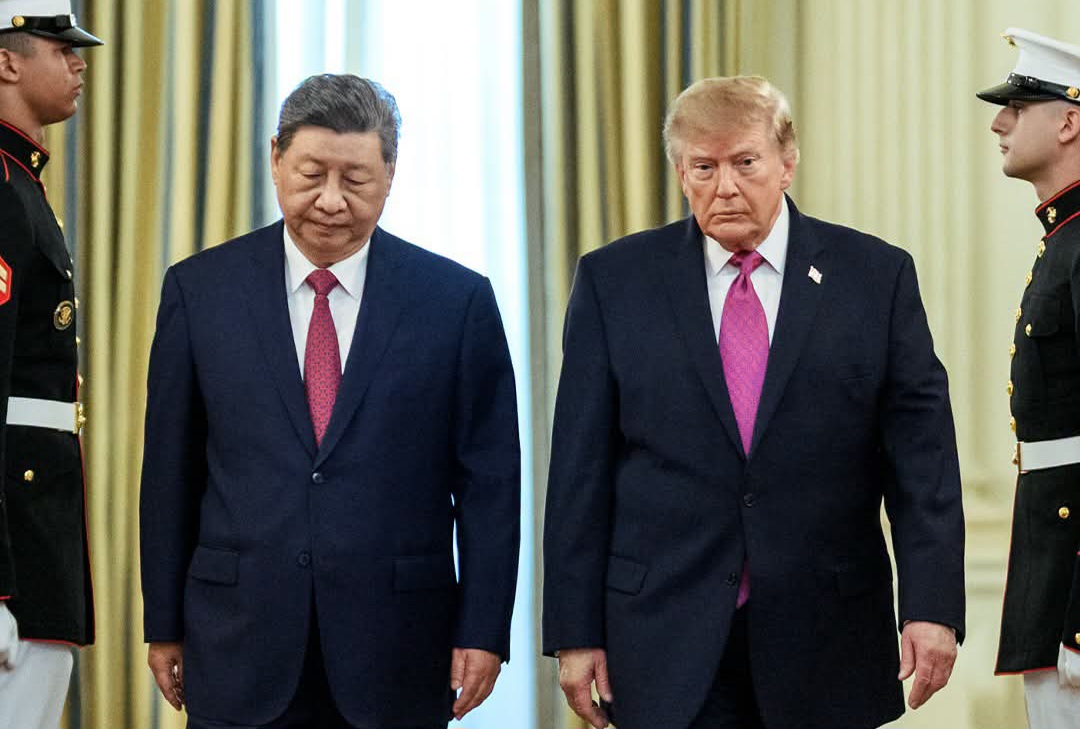
WASHINGTON, September 25, 2026 — Chinese President Xi Jinping’s three-day state visit to Washington has placed the world’s most consequential bilateral relationship at the center of international attention. Xi and U.S. President Donald Trump held high-level talks at the White House on September 24, with trade, technology, artificial intelligence, Taiwan and the war involving Iran among the major issues surrounding the summit.
The visit, Xi’s first trip to Washington in more than a decade, has been marked by considerable diplomatic ceremony. Yet the substance of the summit so far suggests that Washington and Beijing are seeking to manage their competition rather than resolve their fundamental differences. Reuters reported that the meeting produced no major breakthrough on the most contentious issues.
Trade truce extended, but larger questions remain
One of the clearest immediate outcomes is the extension of the existing U.S.-China trade truce by two months. The agreement, which had been due to expire on November 10, gives negotiators additional time to work toward a broader economic arrangement.
The extension is significant because trade remains one of the most important pressure points in the relationship. Washington and Beijing continue to negotiate over tariffs, market access, agricultural purchases, energy, rare-earth materials and technology-related restrictions.
The two governments have therefore demonstrated an interest in preventing another sharp escalation, while leaving many structural economic disagreements unresolved.
Taiwan remains a central strategic fault line
Taiwan was another major issue surrounding the summit. According to Reuters, Xi told Trump that China expected Washington to adhere to what Beijing describes as the “correct position” of opposing Taiwan independence. Taiwan subsequently criticized Xi’s comments, arguing that they sought to influence Washington’s position toward the island.
The issue extends well beyond U.S.-China relations. Japan, South Korea and other U.S. partners in the Indo-Pacific have closely watched the summit because any change in Washington’s approach toward Taiwan could have broader implications for regional security.
Before the summit, the United States publicly reaffirmed its defense commitments to Japan, South Korea and Taiwan. Thus, Taiwan remains an area where economic negotiations and strategic calculations intersect.
AI and technology: cooperation alongside competition
Artificial intelligence has emerged as another major dimension of the U.S.-China relationship. Both countries are competing for technological leadership while also facing common risks associated with advanced AI, including cyberattacks, misuse and potential threats to critical infrastructure. Discussions have included the possibility of mechanisms for communication during serious AI-related incidents.
At the same time, restrictions on advanced technology exports remain a source of tension. The summit therefore illustrates a broader pattern in U.S.-China relations: Washington and Beijing may cooperate on selected risks while continuing to compete intensely over strategic technologies.
This dual-track relationship is likely to become increasingly important as AI affects economic productivity, national security and international influence.
Iran adds another layer of complexity
The summit also took place against the background of the war involving Iran. Washington and Beijing have different approaches to the conflict, adding another geopolitical dimension to their already complicated relationship. Reports from the summit indicated discussion of the Iran issue, but no major breakthrough was announced.
For China, developments in the Middle East have implications for energy security and international diplomacy. For the United States, the conflict remains an important element of its wider foreign-policy agenda.
A message to the Global South
The Washington summit also matters beyond the United States and China. Countries across Asia, Africa, Latin America and the Middle East are increasingly affected by competition between the world’s two largest economies. Trade restrictions, supply-chain restructuring, technology controls, energy prices and investment decisions can have consequences far beyond Washington and Beijing.
For the Global South, the central question is not simply whether Washington or Beijing gains an advantage. Many developing countries are seeking economic opportunities and diplomatic space while avoiding being forced into a binary geopolitical choice.
South Asian countries—including Nepal, India, Bangladesh, Sri Lanka and Pakistan—have particular interests in maintaining access to both Western and Chinese markets, investment and technology. The summit could therefore influence the environment in which smaller and developing countries pursue their own economic and foreign-policy priorities.
India and South Asia watching closely
India has a particularly complex relationship with both Washington and Beijing. India and the United States have expanded strategic and economic cooperation, while India continues to maintain extensive economic relations with China despite significant bilateral disagreements.
Any sustained stabilization of U.S.-China relations could affect Asian economic calculations. Conversely, renewed confrontation could accelerate the restructuring of supply chains and investment toward countries such as India and other Asian economies.
For South Asian countries, stability in the wider Asian economic environment is particularly important because China remains a major trading and infrastructure partner, while the United States remains an important source of investment, technology, education and diaspora-linked economic activity.
The symbolism of the visit
The ceremonial dimension of Xi’s Washington visit has been unusually prominent. Trump personally welcomed Xi, and the White House organized a major state ceremony and dinner. Technology and business leaders were among the prominent guests at the state dinner.
On September 25, Trump is scheduled to accompany Xi to the U.S. National Archives. Reuters reported that the visit is expected to emphasize the historical relationship between the two countries and their future direction.
Such symbolism matters in diplomacy because the presentation of the relationship can itself communicate a desire to prevent confrontation. But symbolism cannot substitute for agreements on the substantive disputes separating the two governments.
Beyond Washington: managing competition
The most important outcome of the Xi-Trump meeting may therefore be what happens after Xi leaves Washington. The extension of the trade truce provides negotiators with additional time. Continued dialogue on AI could establish limited areas of cooperation. But Taiwan, technology restrictions, trade imbalances and broader strategic competition remain unresolved.
The summit consequently appears less like a comprehensive reset and more like an attempt to establish guardrails around a highly competitive relationship. For the international community, this distinction is important. A period of stable U.S.-China relations could reduce economic uncertainty and provide greater diplomatic space for other countries. Continued confrontation, by contrast, could deepen fragmentation in trade, technology and international politics.
Conclusion
Xi Jinping’s Washington visit demonstrates that competition and engagement between the United States and China are now occurring simultaneously. Washington and Beijing have incentives to prevent an uncontrolled deterioration of relations, particularly because their economic decisions affect global markets. At the same time, fundamental strategic differences remain.
The extension of the trade truce is an immediate mechanism for maintaining dialogue, but it is not a comprehensive settlement. Taiwan remains strategically sensitive; technology competition continues; AI creates both opportunities and risks; and geopolitical conflicts such as Iran complicate the relationship.
For the Global South, the developing U.S.-China relationship will be closely watched—not simply as a contest between two major powers, but because its consequences will be felt across trade, investment, technology, energy and international diplomacy.
The Washington summit may therefore be remembered less for a single dramatic agreement than for what it reveals about the emerging international order: the United States and China are competing for influence while simultaneously recognizing the need to manage their rivalry.
#Writer is International President of the SAARC Journalist Forum


