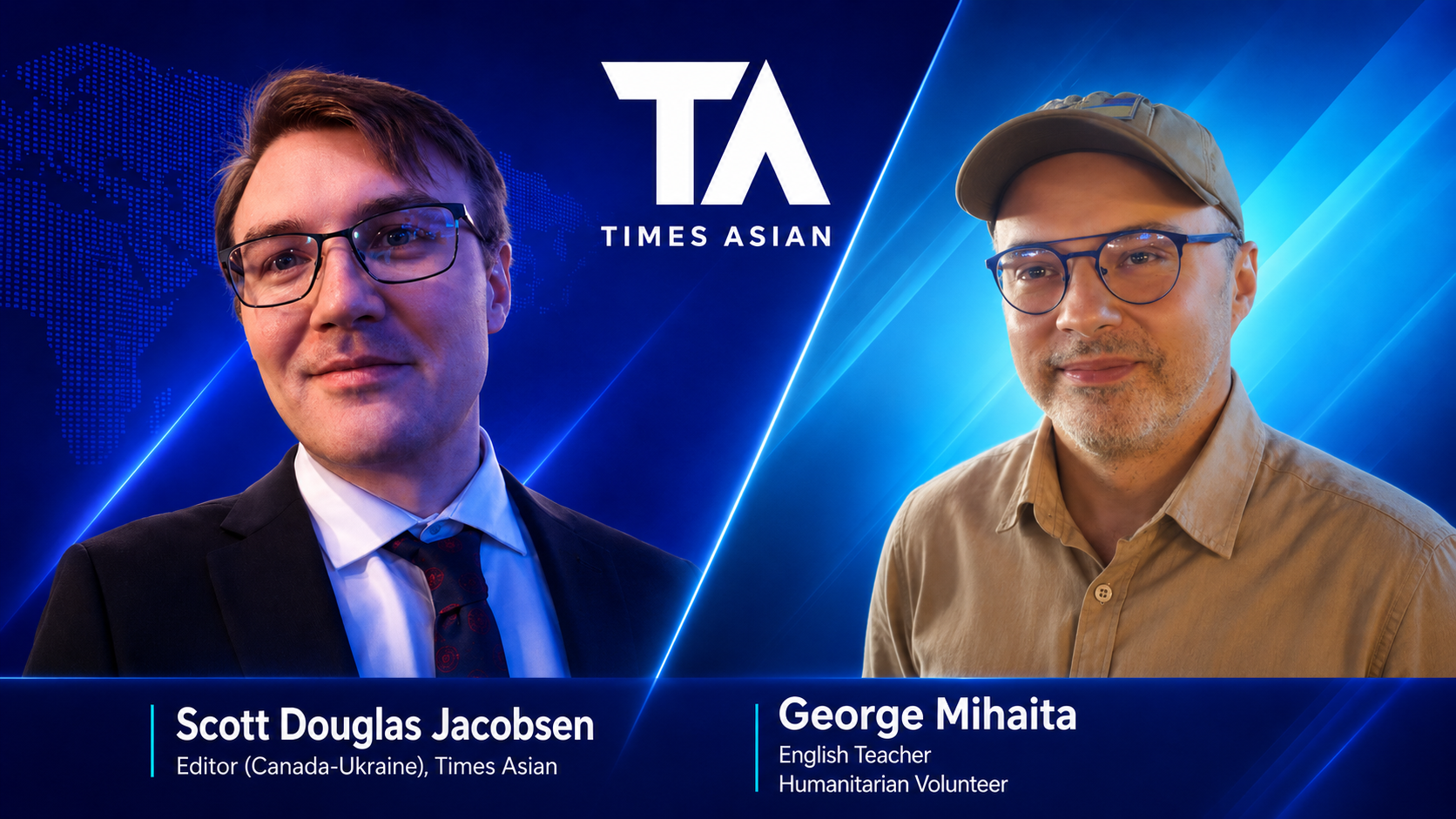
By Scott Douglas Jacobsen
Editor (Canada-Ukraine Affairs), Times Asian
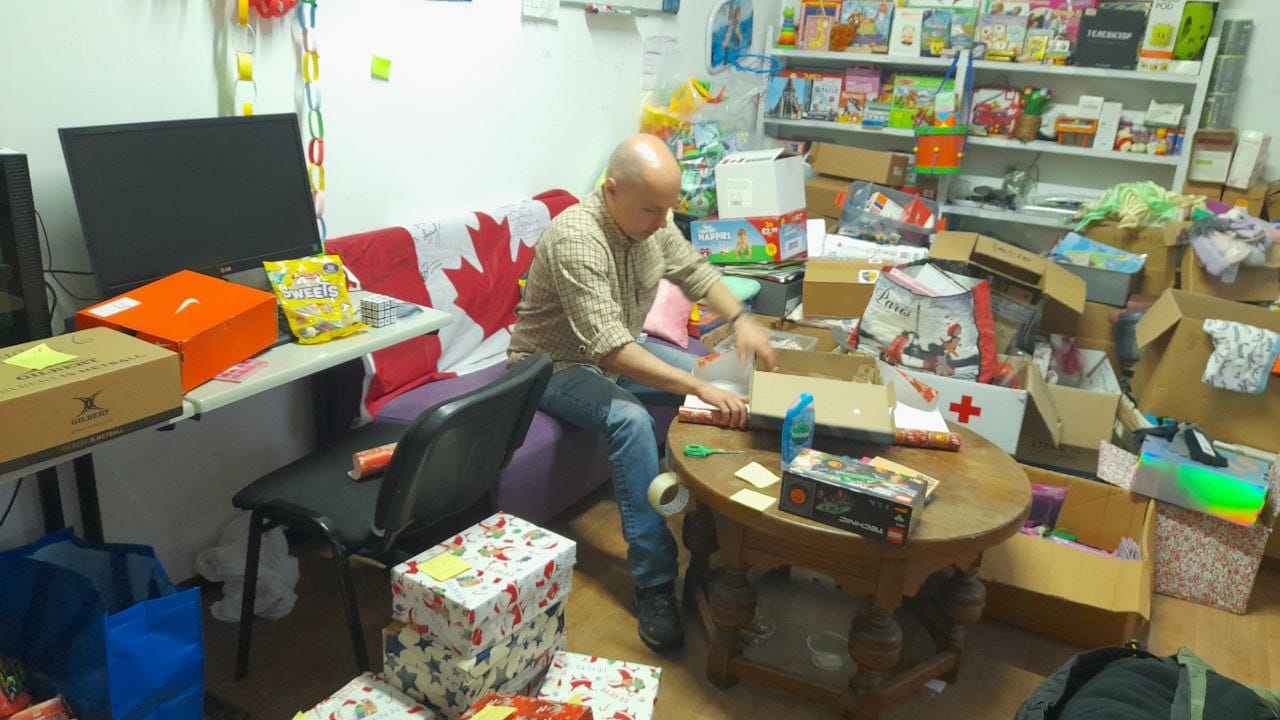
George Mihaita is a Romanian English teacher, authorized translator, humanitarian volunteer, and citizen journalist active in Ukraine. An educator with more than a decade of teaching experience, he has taught Romanian and Ukrainian students, including Ukrainian civilians and military personnel. His volunteer activities include language education, humanitarian assistance, accessibility projects, and documenting the effects of Russian attacks. Mihaita also advocates for Ukrainian sovereignty and promotes greater cultural and linguistic exchange between Romania and Ukraine.
In this interview, Scott Douglas Jacobsen speaks with George Mihaita about his decision to volunteer in Ukraine, opposition to pro-Russian sentiment in Romania, and work as an English teacher, humanitarian volunteer, and citizen journalist. Mihaita discusses teaching Ukrainian civilians and soldiers, documenting Russian attacks, working around security risks, and maintaining online teaching for his Romanian students. He also reflects on political responsibility, language, civic solidarity, and supporting Ukraine through practical, sustained service.
Scott Douglas Jacobsen: George, what made you choose to volunteer in 2023? I know my excuse. I was talked into it by a Romanian politician.
George Mihaita: Remus is a friend, and I can see how he talked you into it. He is that kind of guy.
Jacosen: He was all suave with his ponytail.
Mihaita: I talked myself into it. At the time, I had met Remus in Bucharest a few times, and we were discussing this, and I knew he was coming. For me, it was a matter of shame at being associated with a growing number of aggressive Putinists.
Jacobsen: In Romania?
Mihaita: Yes. Well, I really doubt that we have actual supporters who provide material support to Russia in any way, shape, or form. I am sure there are a few, but at the fringe, they would be a few hundred people in our country at most. No, they are just people who talk in support of Russia in one way or another and, yes, in some cases without even realizing it. They position themselves in the middle between the aggressor and the victim and say things like, “I hate both, so it is not my war.” So, unknowingly, you could say unwittingly.
Such people are a shame to be associated with. The way they glorify murder, rape and child molestation, at the same time as calling themselves “Ortodox”, the way they condemn the Ukrainian people foe fighting for their freedom, at the same time as calling themselves “patriotic” is too much of George Orwell’s “1984” to want to be associated with. Romanian people who support rassia cannot be “my people “, because if you take a rat and paint a flag on it, it’s still a painted rat.
But to answer your question, an extreme case would be around 46 percent, if you look at the 46 percent who voted for AUR candidate George Simion in the second round of the 2025 presidential election. But that is 46 percent of the people who cast valid votes, not 46 percent of the country. I think, more realistically, we are looking at perhaps 20 percent of people who genuinely support Russia in their minds.
Jacobsen: There are other conversations about the internal or domestic Russian population. However, the ability to acquire accurate survey data in an authoritarian regime is limited. According to Reporters Without Borders’ 2026 World Press Freedom Index, Russia ranks 172nd out of 180 countries and territories. Ukraine ranks 55th, compared with the United States at 64th.
Mihaita: I understand, but that only points to the possibility that support for the regime in Belarus could be even lower.
Jacobsen: Potentially. Take Iran, for instance. Much of the population may not have supported the joint American-Israeli military campaign against Iran, while many people could still strongly oppose the Khamenei-led regime. In a similar manner, it may be the same with those under the thumb of a Belarusian system or a Russian system. Is that fair?
Mihaita: So, what you mean is that they are not vocally pro-regime, but they would still favour Russia over Ukraine?
Jacobsen: Or even by default, in the sense that they do not want the conflict and they do not support the aggressor in the conflict, but in practice they would sell out Ukraine completely.
Mihaita: In a passive way.
Jacobsen: Yes. Just let them die. Not my problem. There is a North American acronym, NIMBY, N-I-M-B-Y: “not in my backyard.” NIMBY becomes less and less viable as communications technology and trade networks become more integrated than they have ever been.
Mihaita: Yes. In a global society, you cannot say NIMBY because you do not live on another planet.
Jacobsen: I mean, there might be regional quasi-empires or spheres of influence, such as China’s. There might be a continuation of nation-states under democratic, theocratic, communist, or autocratic systems. You might even jokingly call North Korea a kind of necrocratic system, governance by the dead, given the continuing political veneration of deceased leaders.
Mihaita: So we have the whole recipe for D&D, pretty much.
Jacobsen: Yeah, that is right. The undead. With trade and other things, it is one of those contexts in which that position is a real position people can have. In terms of its viability, it becomes less reasonable. I think that is fair.
Now, in your position, you are doing the thing that a lot of people do. They are not necessarily going to be on camera, right? They are not going to be doing TikToks. They are not going to be doing Instagram as much. They might take some photographs and do some documentary work, but they are doing the core work: training people in English, doing humanitarian work, going to Irpin.
Mihaita: Yes, I actually do show my face on camera. When something important happens here, I try to report on it from citizen journalism.
So, from the beginning, I completely gave up any claim to unbiased journalism and only talk from my own point of view, as a person who has feelings about this and will not do anything to censor them.
Jacobsen: What about the training you do in English? Who do you teach? Why did you get into teaching English?
Mihaita: This is actually my job. This is a very important thing.
Jacobsen: You are volunteering.
Mihaita: Yes.
Jacobsen: You could be making money and not having Shahed drones blow up above your head, right? You know, you could be sitting at your computer, being bored, as most teachers are, and helping people improve their English skills.
Mihaita: I want to nitpick, but I do not know about “being bored of work,” as I always say. It started out as, “Let me do this thing until I find a better job,” coming out of college.
Jacobsen: Yeah.
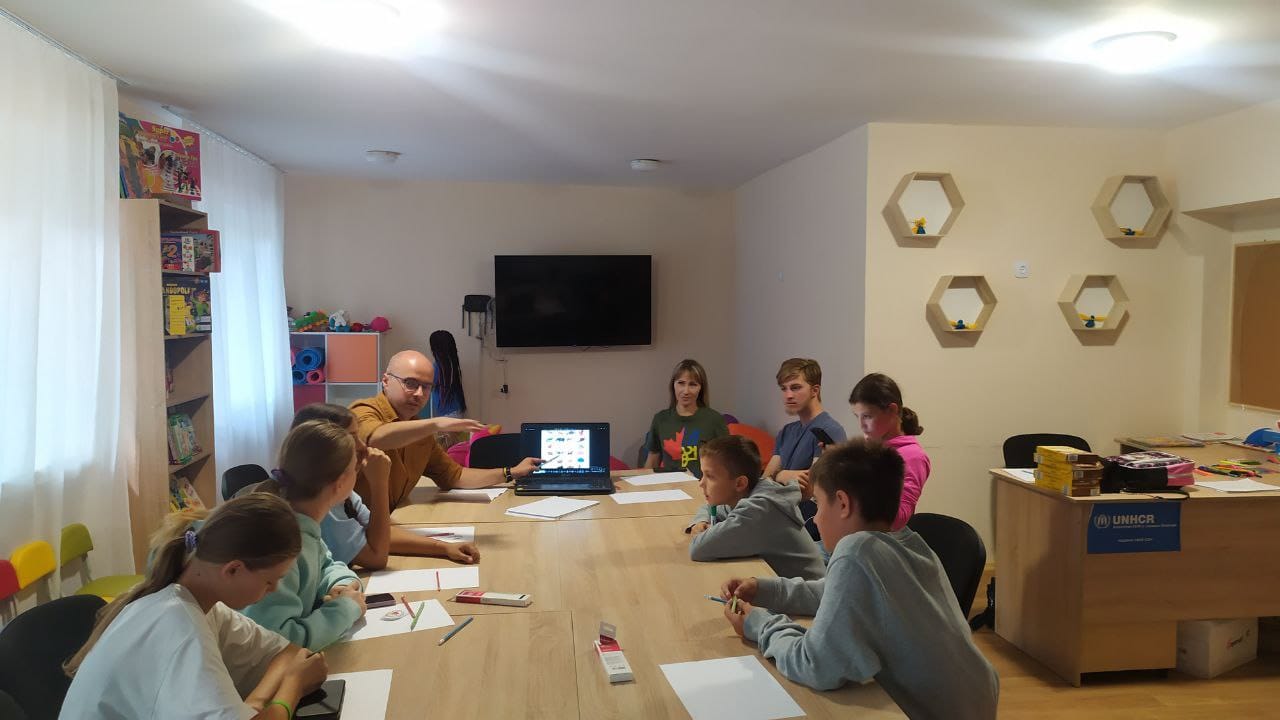
Mihaita: But that was about 13 years ago. I did promise myself that the moment I got bored with it, I would stop doing it, because it would be detrimental to me and my students. So, usually, I try to find something creative to do, some new and more interactive way to teach. Of course, it is much more difficult to be creative as a teacher in this environment. It is stressful, and there is no real possibility of planning long term.
Jacobsen: Sure.
Mihaita: But I do try to do it. This is what I had done back home for 10 years before I came here, first as a teacher in a public school and then privately through my own company. I still teach my Romanian students online. That is what keeps me fed and pays my expenses here in Ukraine.
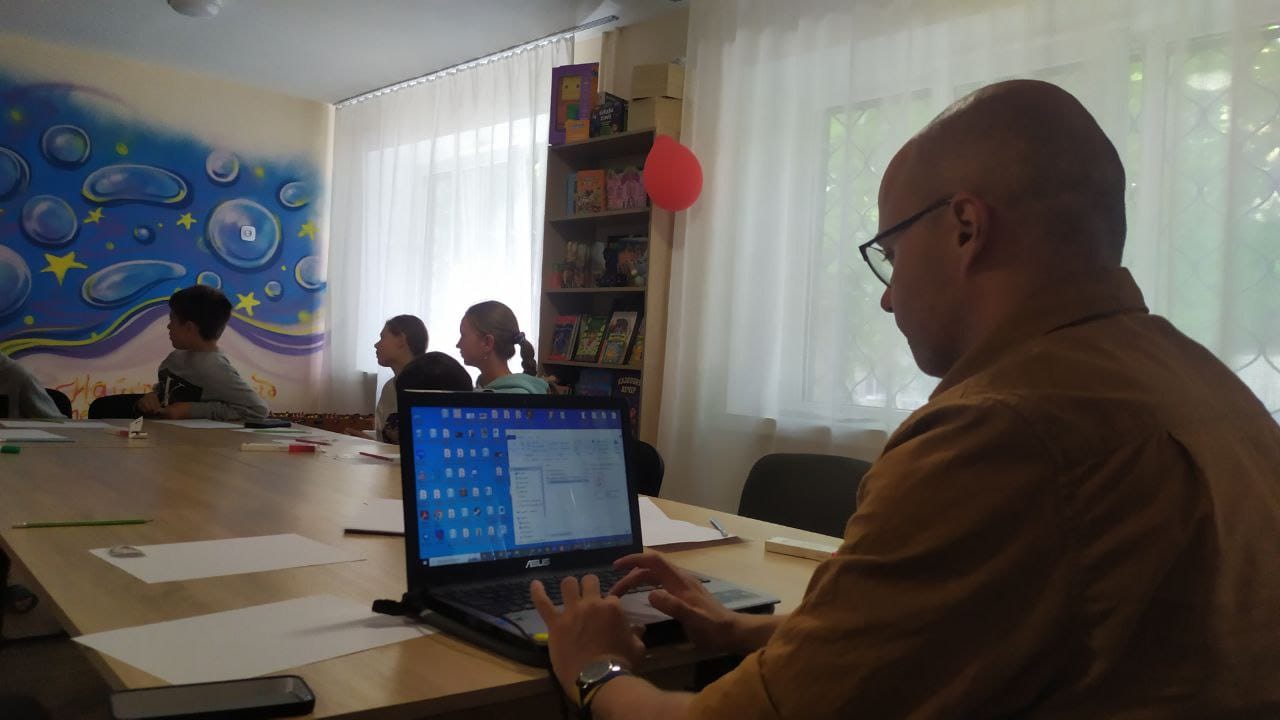
But I also teach Ukrainians. I have a group of Ukrainian civilians whom I teach English. We have been together for the better part of three years now. Another more recent group consists of Ukrainians whom I teach Romanian. These are people who are currently in Romania or are considering settling there permanently, so they want to learn the language.
For about eight months, I also worked with Plus Plus English, teaching soldiers through the NGO. I have not been working with them for about three months now. They have taken the project in a different direction, and I wish them all the best. They are formally registered because they receive donations, contributions, and corporate donations.
It is supposed to become paid work soon. That is not my interest, because I am not here to get paid, but it will eventually turn into that. They have a lot of good teachers working there.
I received a podiaka, actually, a Ukrainian certificate of appreciation, essentially saying thank you for your service and everything.
In some situations, I was teaching soldiers who were in trenches or bunkers near the front line. I cannot say whether it was the first line, second line, or another case, but they were actively deployed because sometimes they had to interrupt our conversations when something came over their walkie-talkies. So they were actively receiving instructions. That was part of why we had to sign an NDA.
That period was a very gratifying part of my work. It was a pleasure to create materials from scratch specifically for them and I even created a series of worksheets introducing a humanoid soldier cat, called “Agent Taras”, after Taras Schevchenko. Most of the soldiers need perspective to look forward to, after the war. But if my work improved their activity even by 1%, then I am honoured to have been of service.
I even found two jobs here in Kyiv as an English teacher. They are always looking for foreign English teachers, especially teachers with experience. But unfortunately, neither job would pay me as much as my own work with Romanian students does, and it would mean having a fixed schedule.
Right now, I teach online, so I can move my lessons around and find time to do volunteer work more or less as I please. So, for now, I stick with my own company.
Jacobsen: Are there many Romanians who want to learn English or Ukrainian?
Mihaita: There is consistently a healthy number of Romanians who want to learn English, and many people in Romania speak English to some degree.
Ukrainian, on the other hand, no. I have only met Romanians who wanted to learn Ukrainian partly as a political statement because they support Ukraine.
Jacobsen: Other than that, no?
Mihaita: No. They want to learn it because they support Ukraine, because they want to understand the culture better, and because they understand that language is a vessel for cultural identity and, to some extent, personal identity.
You cannot fully understand Shevchenko, Taras Shevchenko, unless you read him in Ukrainian, just as you cannot fully understand Shakespeare if you read him only in Romanian.
But that is pretty much the extent of it for now. I am confident that this will change and that the numbers will grow as we move from active war into rebuilding. Inevitably, as neighbouring countries, Romania and Ukraine will be doing more together.
Jacobsen: Thank you very much for the opportunity and your time, George.
Scott Douglas Jacobsen is a Canadian journalist and publisher who serves as Times Asian’s Editor for Canada and Ukraine Affairs and writes on international affairs.


